Quick answer
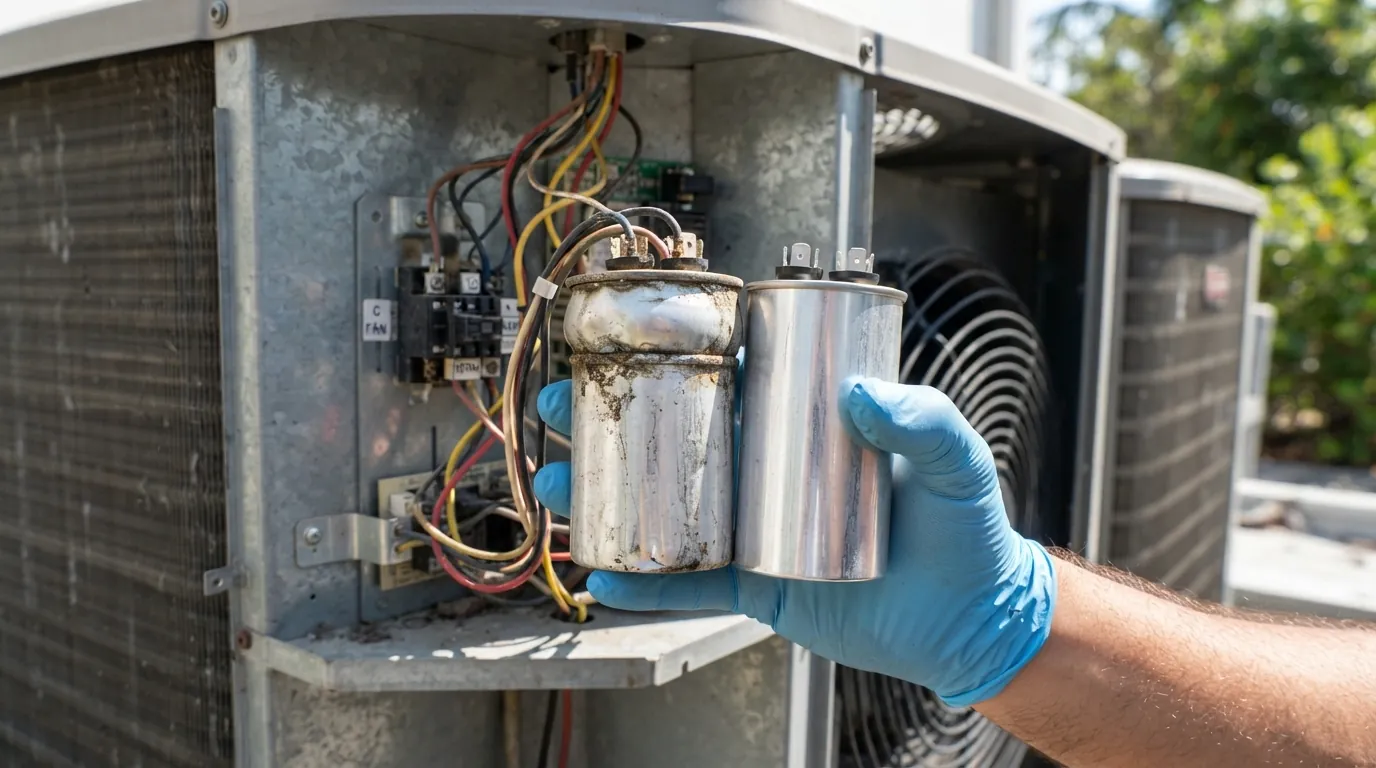
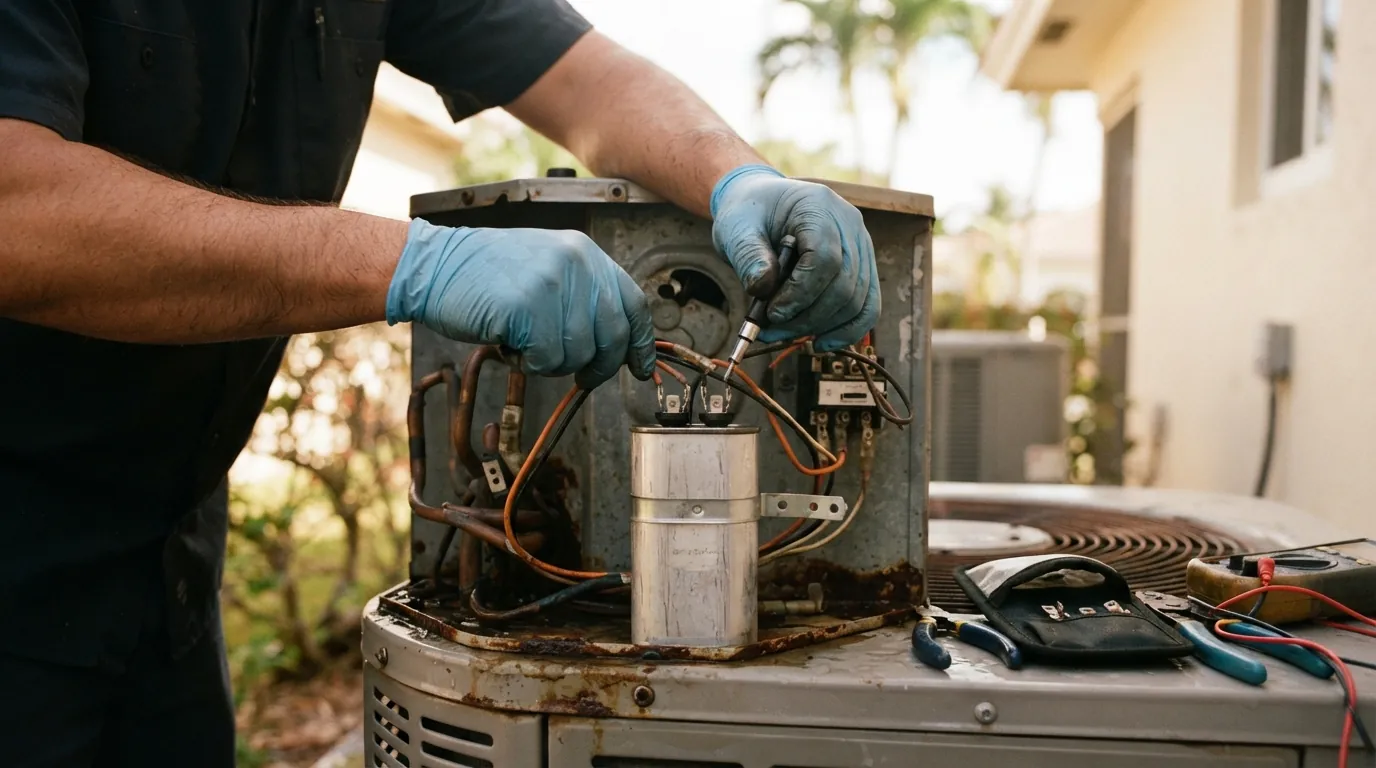
An AC capacitor stores and releases electricity to start and run the compressor and condenser fan motor. When it weakens or fails, the outdoor unit hums, clicks or sits still while the indoor fan blows warm air. Replacing it with the correct microfarad and voltage rating restores cooling, usually in under an hour.
Written by Sylvia Denton, HVAC Guides Editor. Updated 2026-09-22.
Most residential condensers use a dual run capacitor: one can with two ratings, one for the compressor and one for the outdoor fan motor. It gives each motor the push it needs to start and helps it run efficiently. Heat is its enemy, and a capacitor mounted inside a condenser in full Miami sun spends the summer at temperatures well past what it enjoys.
Capacitors rarely fail all at once. They drift below their rated microfarads a little each season. At first the system still starts, but the compressor works harder and draws more current. Eventually there is not enough stored charge to start the motor, and the unit hums against the load until the overload trips. Left that way, a cheap part can take a compressor or fan motor down with it.
We test capacitors on every repair and tune-up, not just when something has failed. A reading that is 10 percent low in April is a replacement in April, not an emergency call in July.