Quick answer
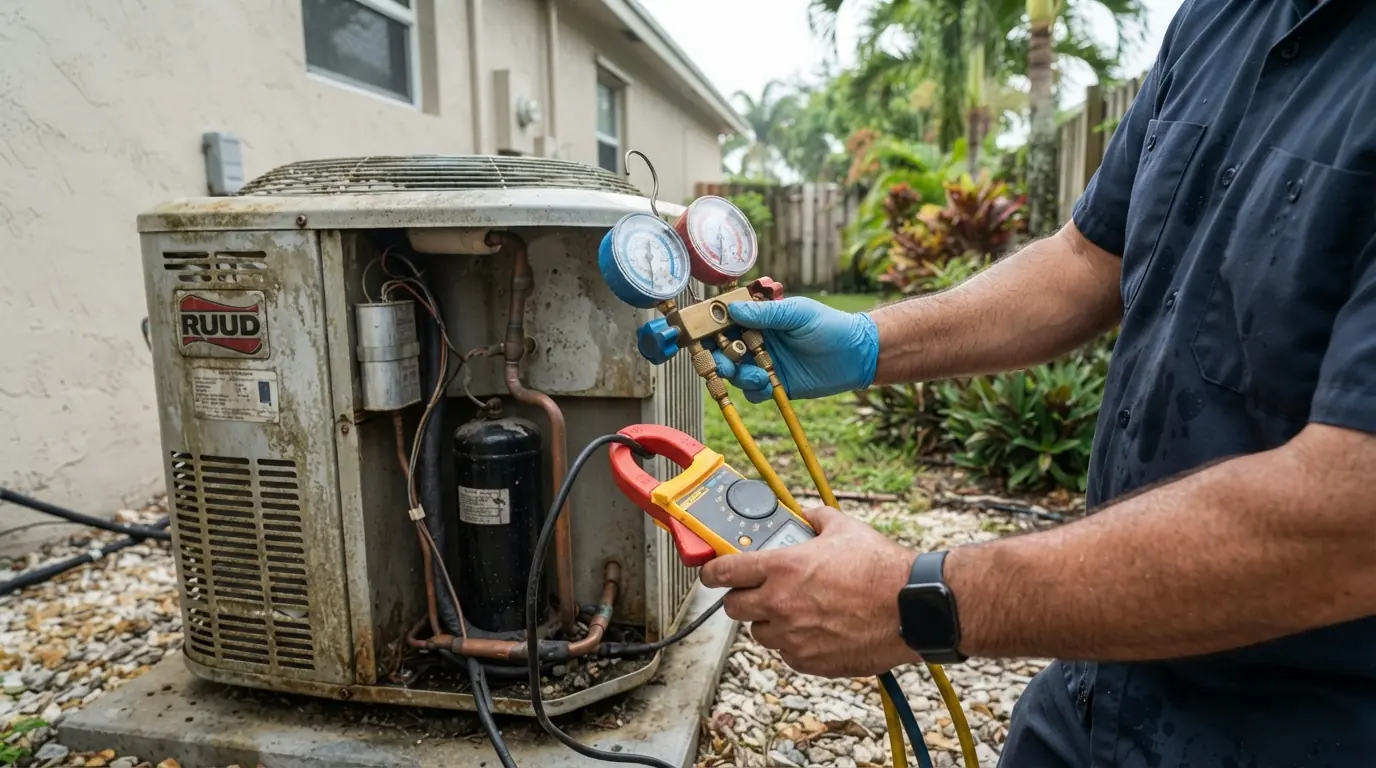
An AC inspection in Miami documents the system's age, refrigerant type, condition and performance. It includes readings for temperature split, refrigerant pressures and electrical components, a look at the drain, coils, ductwork and tie-downs, and a written report of any repairs needed and the system's expected remaining life.
Written by Sylvia Denton, HVAC Guides Editor. Updated 2026-09-22.
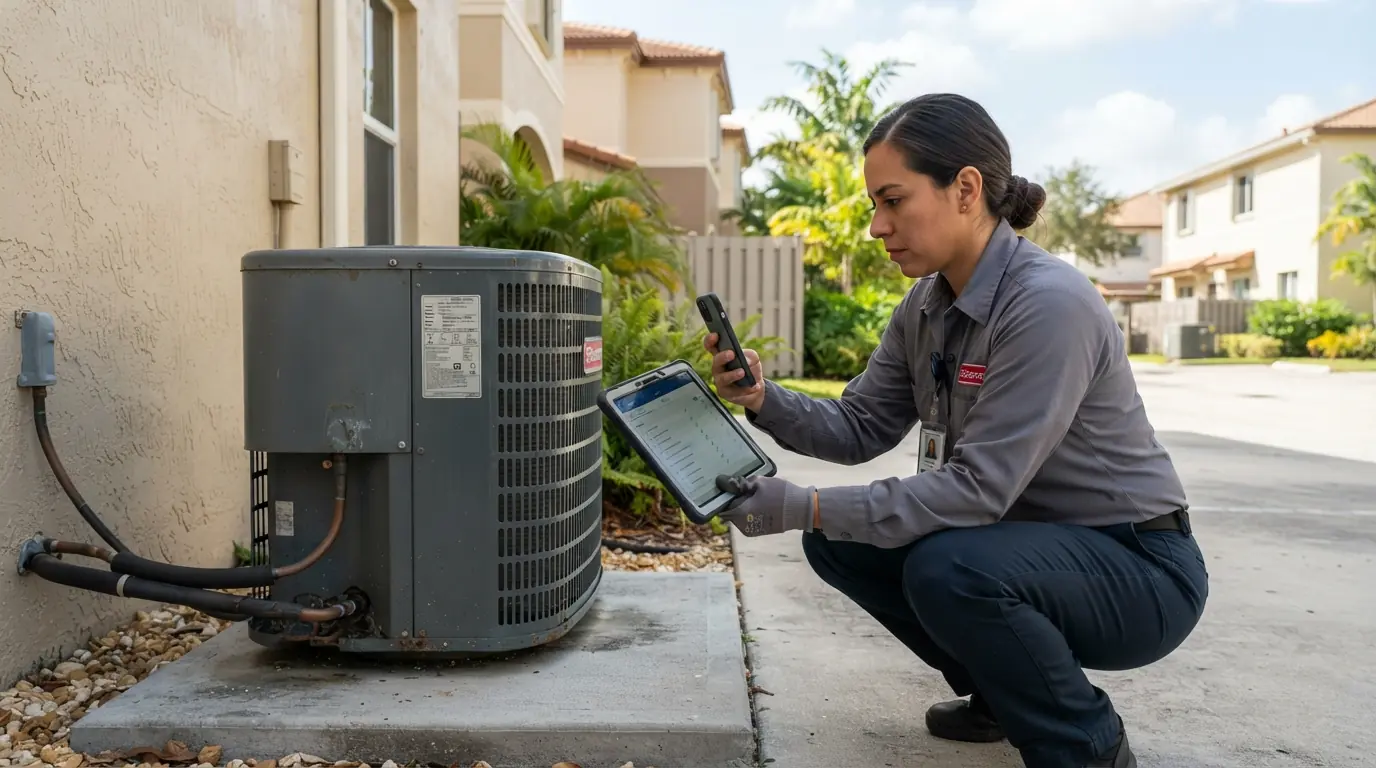
A general home inspection usually checks that the AC turns on and blows cool air. That tells you very little about whether it will survive the next summer. An HVAC-specific inspection goes further: we read the data plates to confirm age and refrigerant, measure how well the system is actually cooling, test the electrical components, and look at the parts that fail most in Miami.
Buyers use the report to negotiate a repair credit or plan a replacement budget. Sellers use it to fix problems before listing. Landlords use it between tenants. Insurance adjusters and property managers use it to document condition after a storm or a leak.
The report is written for the person reading it, not for another technician: what we found, what it means, what should be fixed now, and what can wait.