Quick answer
Central air conditioning in Miami is almost always a split system: a condenser outside, an air handler in a closet, garage or attic, and ductwork to each room. Getting it right means sizing by load calculation, matching the indoor and outdoor units, sealing the ducts, and installing a drain and float switch that can handle Miami humidity.
Written by Sylvia Denton, HVAC Guides Editor. Updated 2026-09-22.
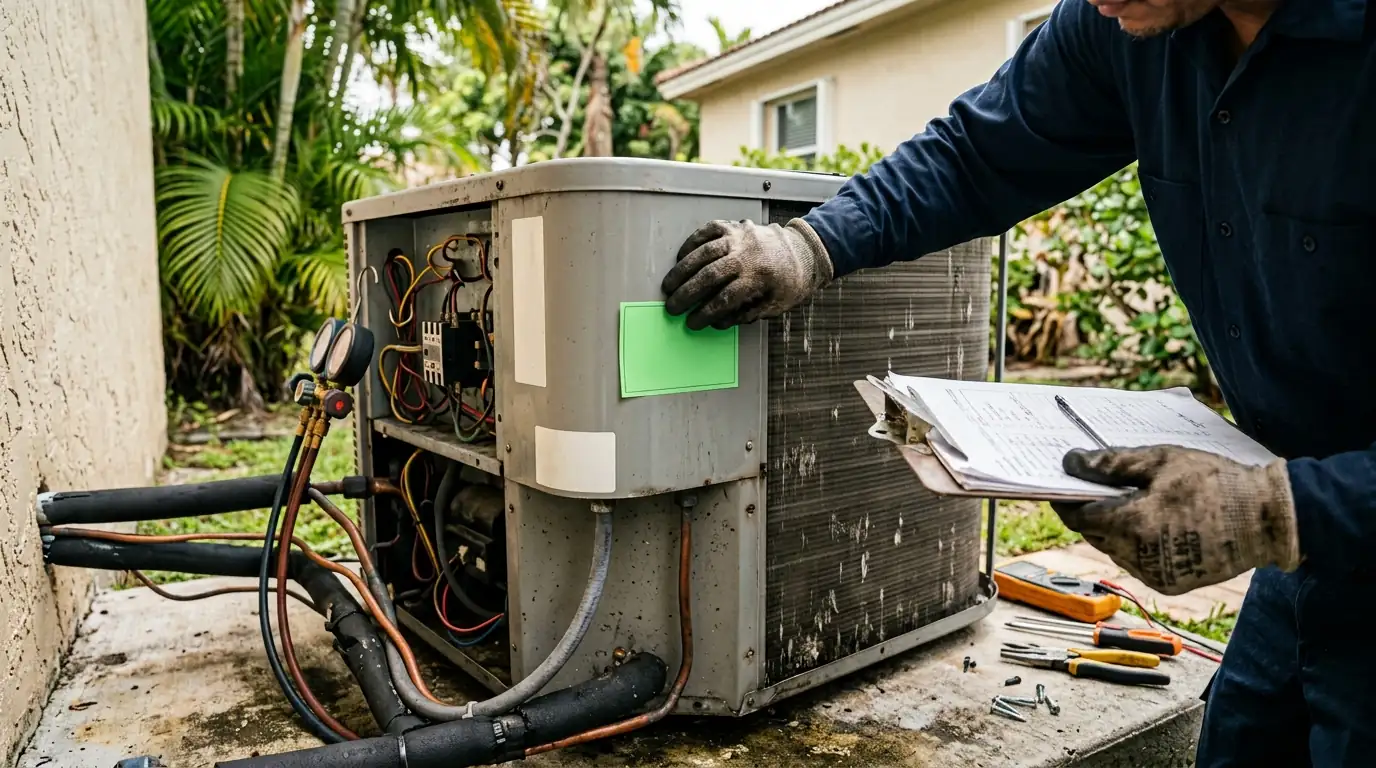
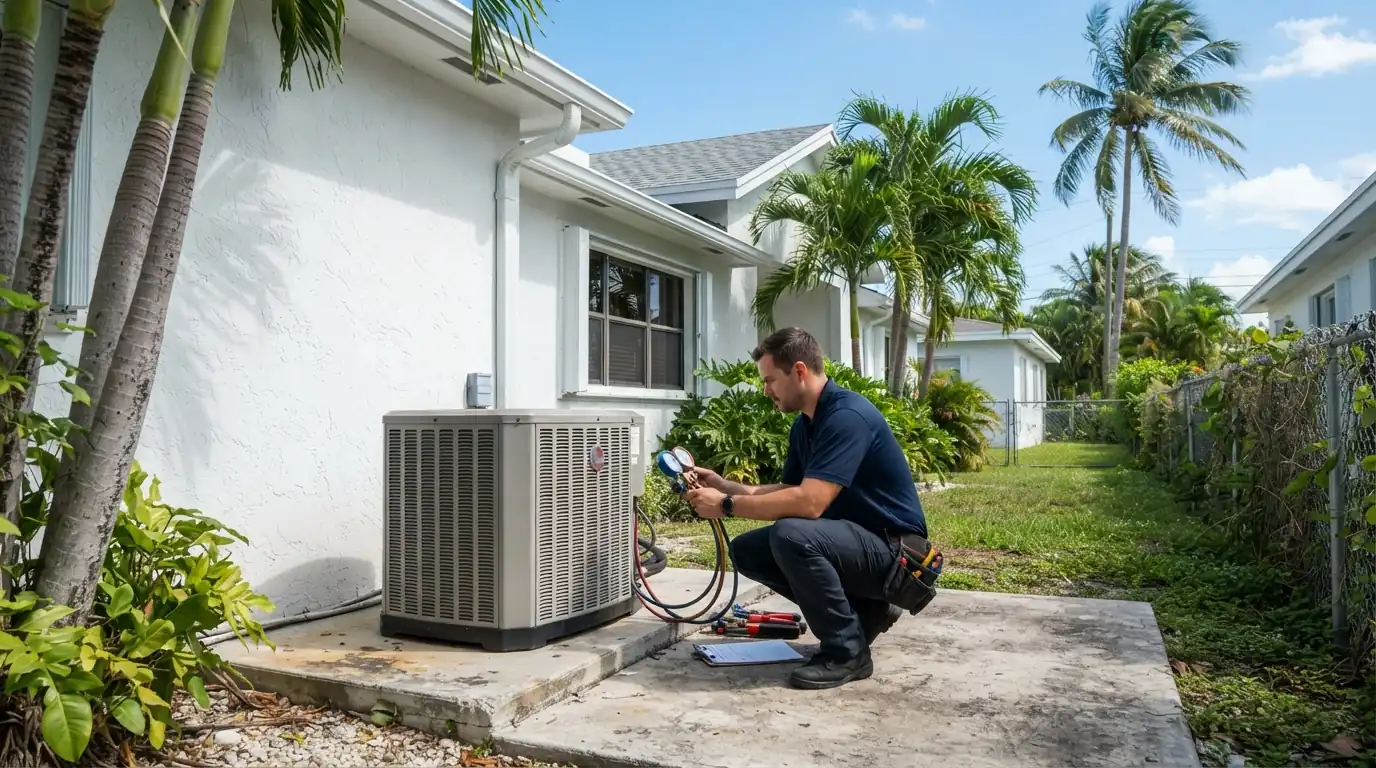
Central air replaced window units across Miami from the 1960s on, and most single-family homes and townhomes now have a split system. The outdoor condenser holds the compressor and dumps heat. The indoor air handler holds the evaporator coil and blower, which cool and dry the air before it goes through the ducts. A thermostat ties the two together.
The system is only as good as its weakest part. A new high-efficiency condenser paired with an old air handler loses much of its rated efficiency. New equipment on leaky attic ducts cools the attic along with the house. And a system sized by square footage alone often ends up oversized, which in Miami means a cold, clammy house.
We treat central air as a whole system. Whether you are adding it to a home that has never had it, replacing an aging split, or converting from a package unit, we look at the equipment, the ducts, the drain and the electrical together.