Quick answer
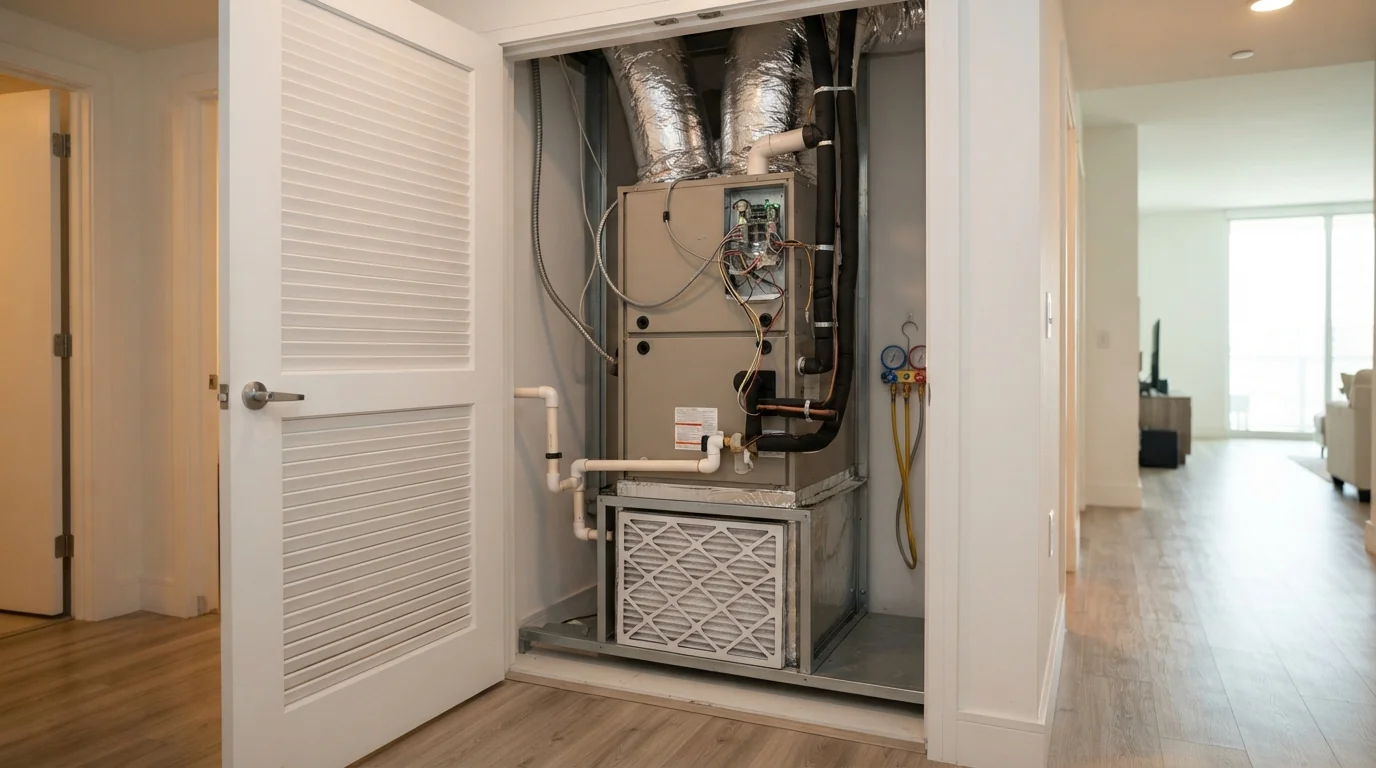
A condo AC replacement in Miami usually means swapping a closet air handler and, if the unit has one, a condenser on a balcony or roof, while meeting association rules on equipment, work hours, insurance certificates and elevator use. Some high-rises use water-source heat pumps tied to a cooling tower, which are replaced like-for-like.
Written by Sylvia Denton, HVAC Guides Editor. Updated 2026-09-22.
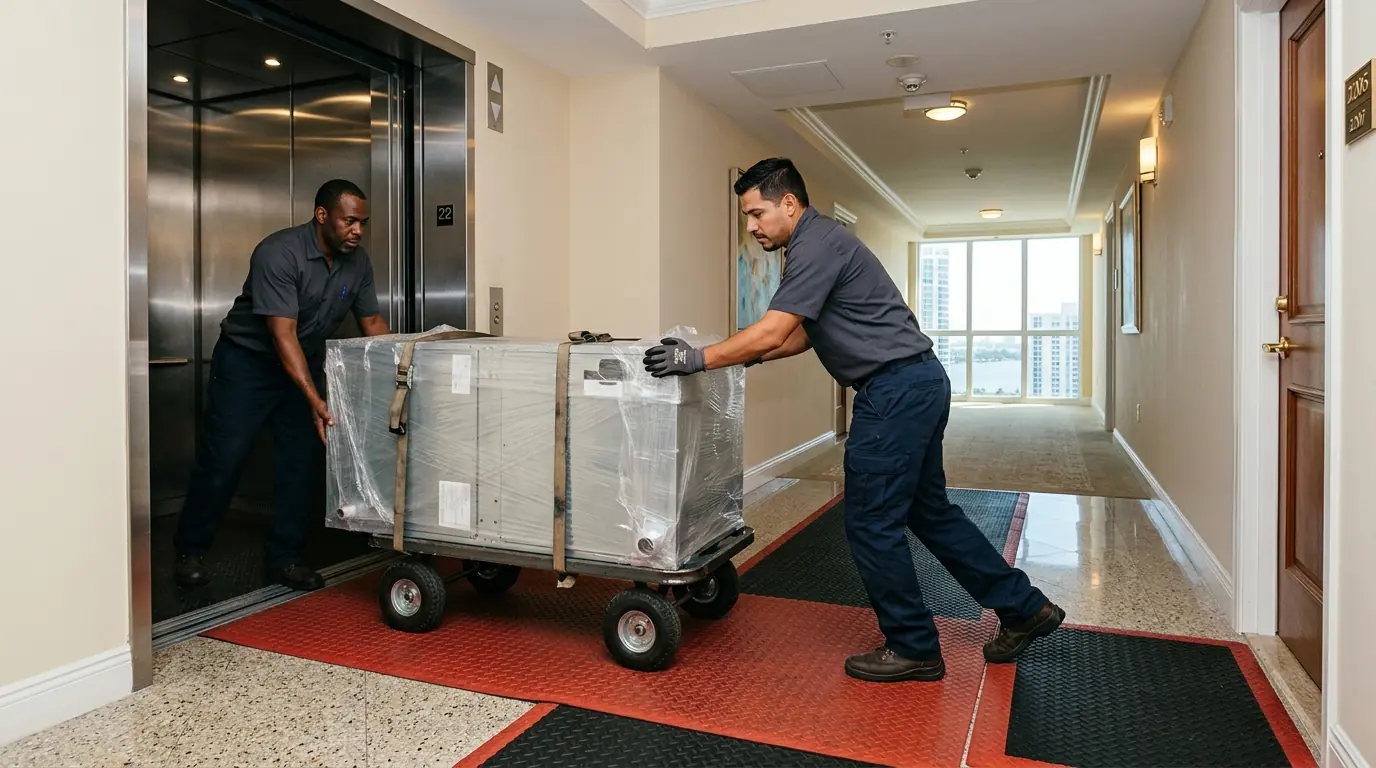
Most condo owners discover the building's rules the day they need a new system. Associations commonly require an approved contractor application, booked freight elevator time, work limited to weekday hours, and sometimes a building engineer present when the water loop is opened. Miss one of those and the crew is turned away at the loading dock.
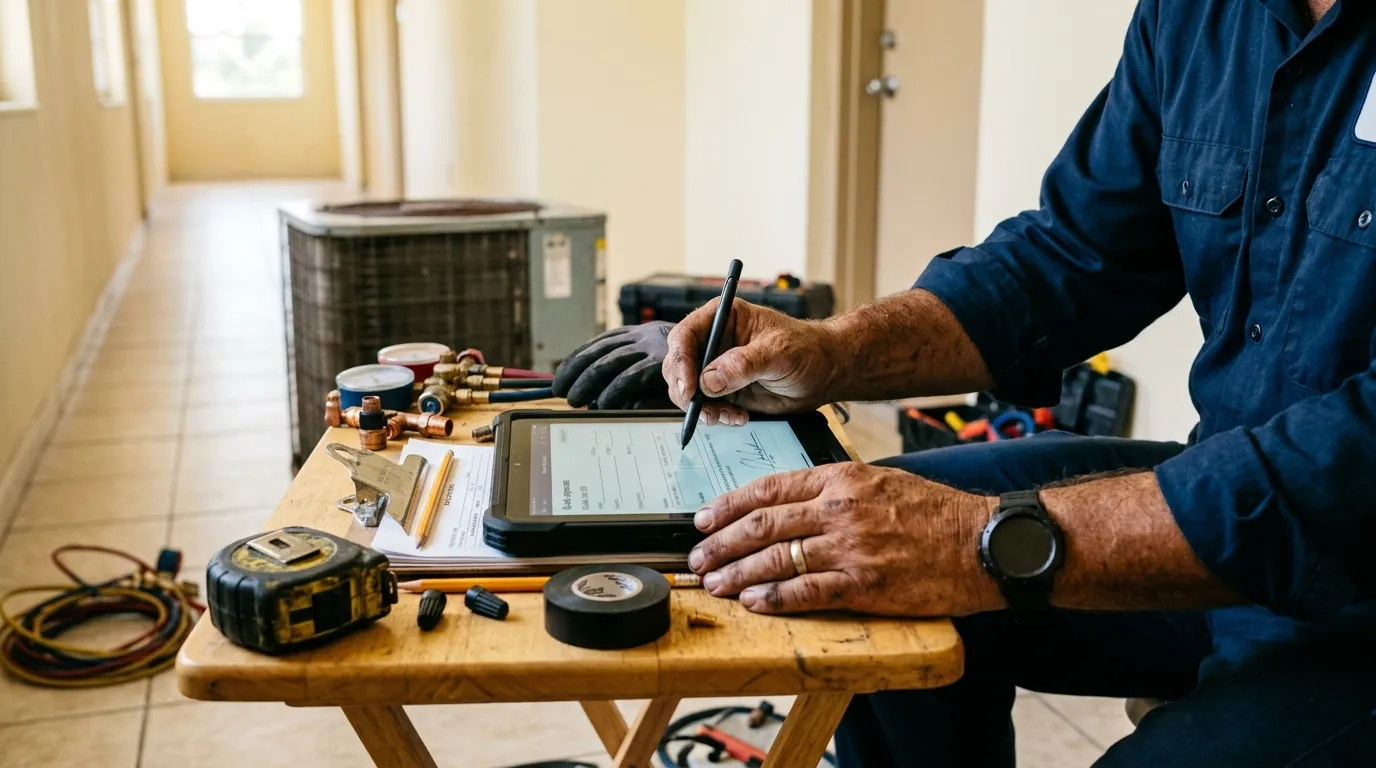
We start with the paperwork, not the equipment. Once we know the building, we request the association's requirements, complete the contractor paperwork, reserve the elevator and confirm with the engineer. Then the technician visits the unit to measure the closet, check the electrical and identify what kind of system you actually have.
Miami condos run on three main types. Split systems with a closet air handler and a condenser on the balcony or roof are common in low and mid-rise buildings. Water-source heat pumps connected to a central cooling tower are common in older high-rises along Brickell and Miami Beach. Newer towers sometimes use fan coils on a chilled water loop. Each is replaced differently, and the association usually dictates which is allowed.