Quick answer
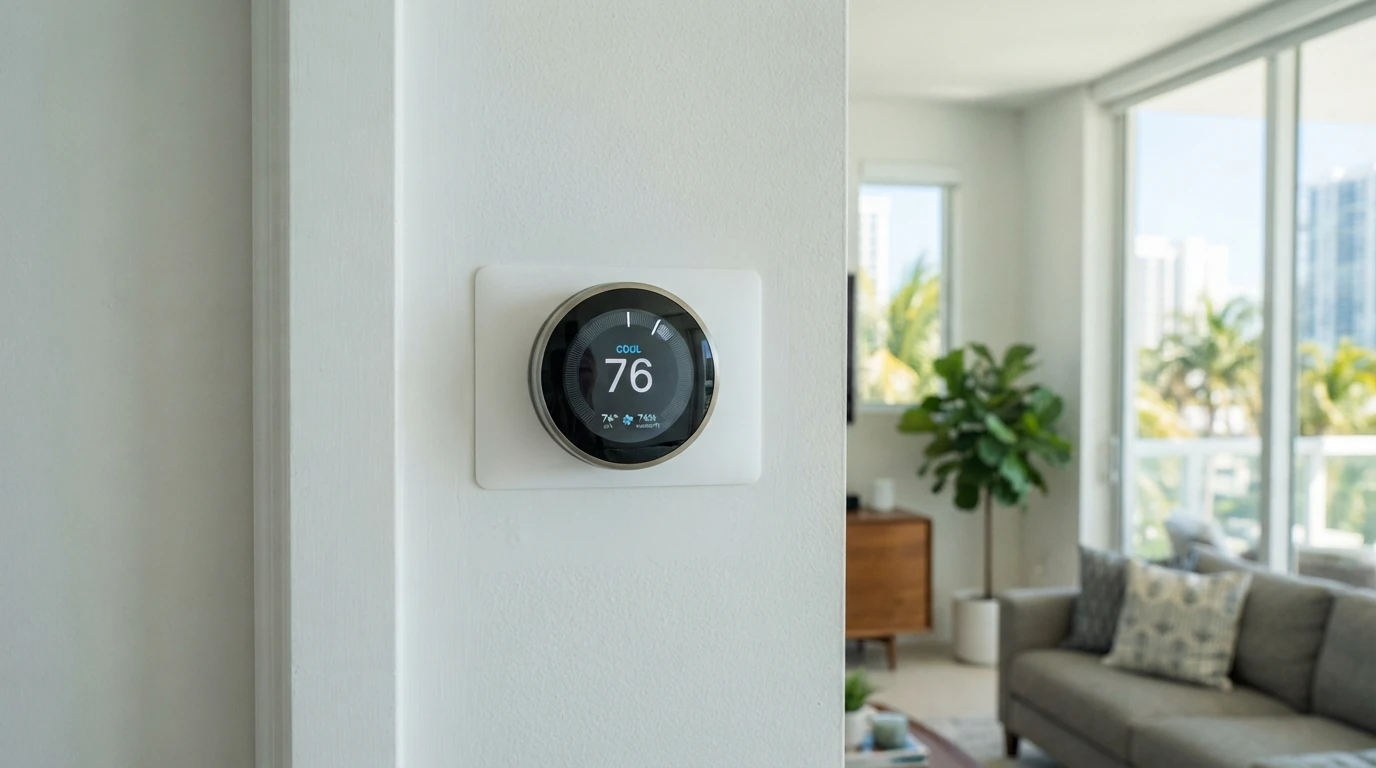
Thermostat repair covers blank displays, wrong temperature readings, short cycling, a system that will not turn on or off, and wiring faults between the thermostat and the air handler. In Miami, a replacement thermostat with humidity sensing and a dehumidify setting often improves comfort more than any other small upgrade.
Written by Sylvia Denton, HVAC Guides Editor. Updated 2026-09-22.
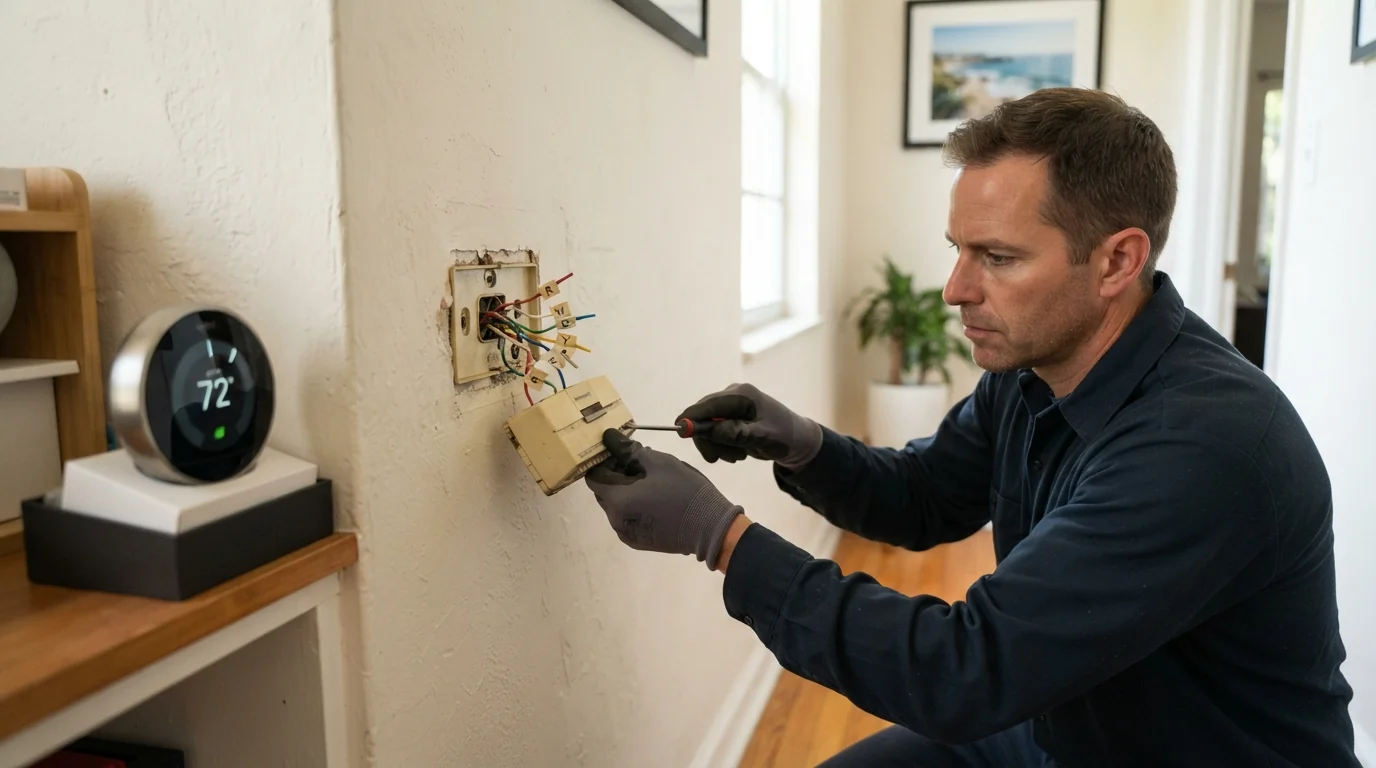
The thermostat is the only part of the system most homeowners touch, and it is often blamed for problems it did not cause. It is also sometimes the real culprit. A dead battery, a loose wire at the terminal, a thermostat mounted where afternoon sun hits it, or a failed relay inside the unit can all leave the house too warm or the system running nonstop.
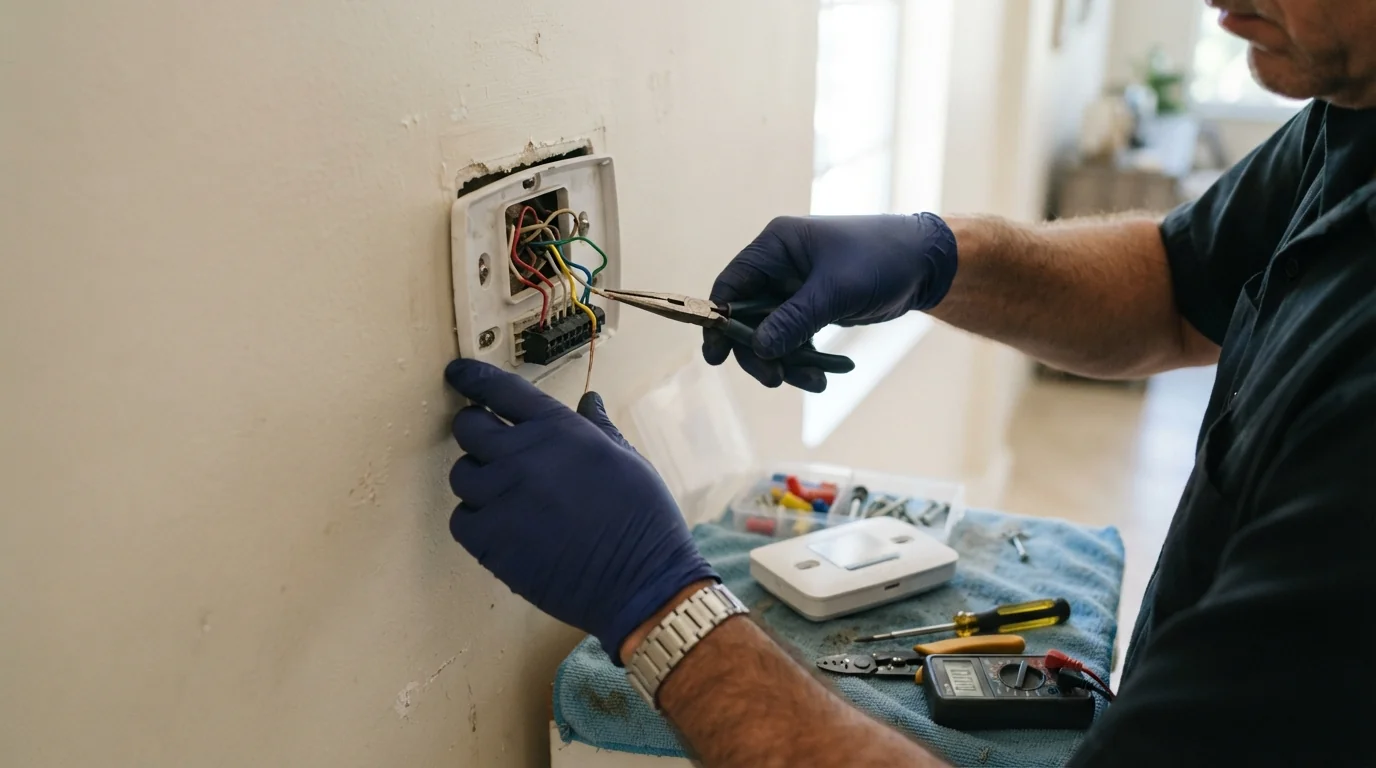
We check the thermostat the way we check any other part: voltage at the terminals, the call signals to the air handler and condenser, the sensor reading against a calibrated thermometer, and the wiring back to the control board. That separates a thermostat problem from an air handler or outdoor unit problem in a few minutes.
If replacement makes sense, we match the thermostat to the equipment. Single-stage, two-stage and variable speed systems need different controls, and a communicating inverter system often needs the manufacturer's own thermostat to run at full efficiency.