Skip to content
Before and after the storm

Hurricane AC prep in Miami, FL

An outdoor condenser is one of the most exposed pieces of equipment on a Miami property during a hurricane. A little preparation before the season, and the right steps after a storm, protect the system and the money you have in it.

  • Answered 24/7
  • Same-day repair visits
  • Miami-Dade and Broward
  • Written price first

We repair and install Carrier, Trane, Lennox, Daikin, Mitsubishi Electric and every other major brand found in Miami homes.

CarrierTraneLennoxRheemGoodmanDaikinMitsubishi ElectricAmerican StandardBryantRuudFujitsuLGYorkAmanaCarrierTraneLennoxRheemGoodmanDaikinMitsubishi ElectricAmerican StandardBryantRuudFujitsuLGYorkAmanaCarrierTraneLennoxRheemGoodmanDaikinMitsubishi ElectricAmerican StandardBryantRuudFujitsuLGYorkAmana

Quick answer

Hurricane AC prep in Miami means checking that the condenser is anchored with code-rated tie-downs, installing surge protection, considering an elevated stand in flood-prone areas, and knowing how to shut down and safely restart the system around a storm. After a storm, a flooded or shifted unit should be inspected before it runs.

Written by Sylvia Denton, HVAC Guides Editor. Updated 2026-09-22.

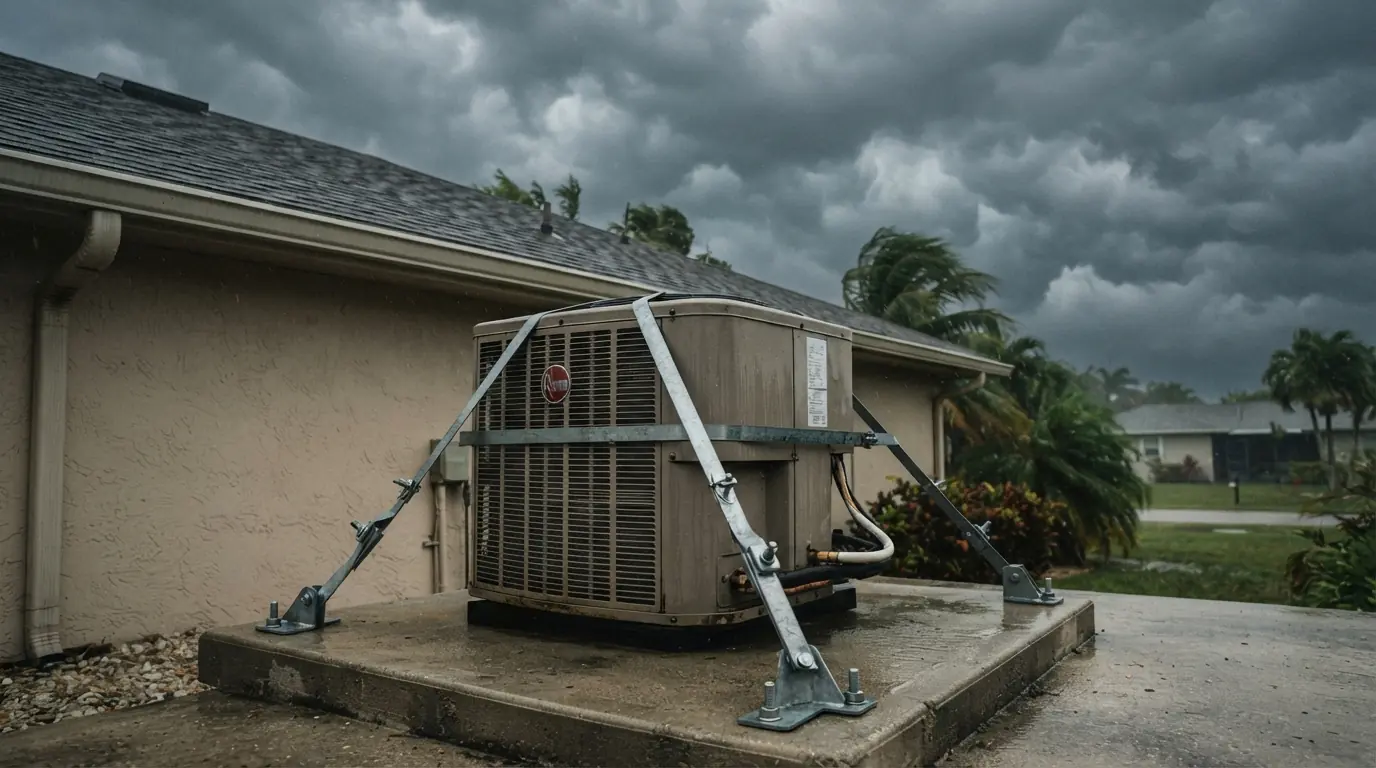
Atlantic hurricane season runs from June 1 to November 30, and South Florida sees the most activity from August through October. Most AC damage we see after storms falls into three groups: condensers that shifted or tipped because tie-downs were missing or rusted, units that sat in flood water, and compressors and boards damaged by power surges when the grid came back.

All three are preventable or at least reducible. The Florida Building Code requires outdoor units to be anchored against wind, but tie-downs rust, bolts loosen and pads crack over the years. Surge protectors at the disconnect cost little compared with a compressor. And in low-lying areas, raising the condenser keeps it above most flood water.

We do a hurricane check as its own visit or as part of a spring tune-up, and after a storm we inspect and restart systems safely before running them.
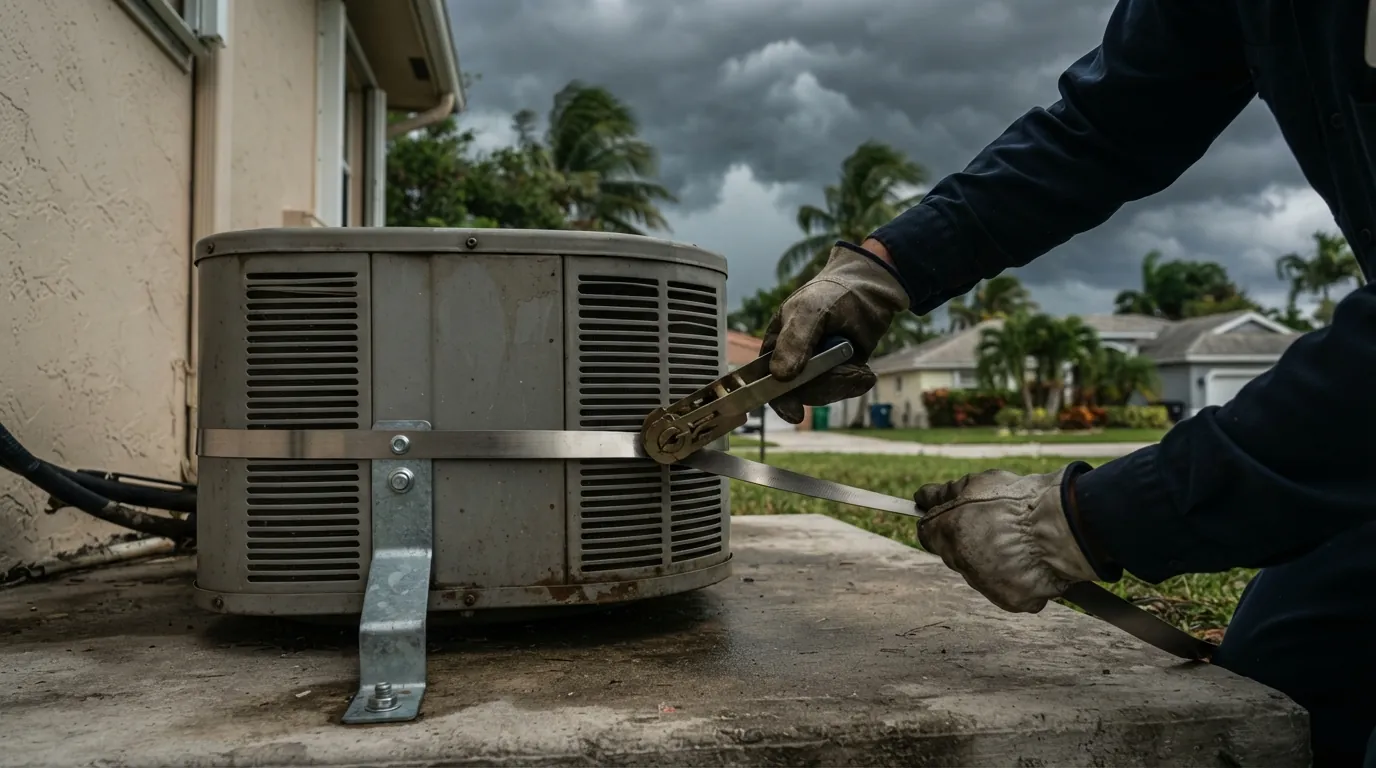
Technician tightening a stainless hurricane tie-down strap on an outdoor condenser as dark storm clouds build over a Miami neighborhood
Benefits

What preparation protects

  • Condensers stay on their pads in high wind
  • Surge protection for compressor and control boards
  • Less flood damage in low-lying areas
  • Faster, safer restarts after the power returns
  • Documentation of condition for insurance
Checklist

What the hurricane check covers

  • Tie-down straps and anchors inspected and tightened
  • Pad level and condition
  • Line set supports and insulation
  • Surge protector condition or installation
  • Disconnect box and wiring
  • Flood exposure and stand height
  • Nearby loose objects and debris risks
  • Drain outlet clear of debris
  • Shutdown and restart instructions for your system
Process

Before, during and after a storm

  1. 1

    Before the season

    Tie-downs, pad, surge protection and flood exposure checked.

  2. 2

    When a storm is coming

    Turn the AC off at the thermostat and the disconnect before the power flickers.

  3. 3

    During the outage

    Leave the system off. Do not cover the condenser with plastic that traps moisture.

  4. 4

    After the storm

    Check for flood water or damage. If the unit sat in water, leave it off and call.

  5. 5

    Safe restart

    Wait for stable power, restore the breaker, then the thermostat; watch for unusual noises.

Pricing

What hurricane prep costs in Miami

$115 to $195Hurricane check visit

Included in spring tune-ups on request.

$185 to $445Tie-down replacement

New code-rated straps and anchors.

$185 to $385Surge protector installation

At the condenser disconnect.

$345 to $895Elevated condenser stand

Raising the unit above flood risk.

$165 to $295Post-storm inspection and restart

Documentation included.

Typical 2026 Miami-Dade ranges, not a quote. After a named storm, post-storm calls are scheduled in order of urgency, so booking the check before the season is the easiest way to be ready.

Local context

Storm risk across Miami-Dade

Wind is the concern everywhere, but flooding varies by neighborhood. Low-lying parts of Miami Beach, Brickell, Edgewater, Coconut Grove, Key Biscayne and areas near canals across the county see storm surge and heavy rain flooding more often. Condensers there benefit most from elevated stands.

Power surges hit every neighborhood. When FPL restores power after an outage, surges and fluctuations are common, and a system that restarts before the pressures equalize can damage the compressor. A surge protector and a thermostat with a restart delay help.

Salt spray driven inland by storm winds also coats condensers far from the beach. A fresh-water rinse after a storm, once it is safe, helps limit corrosion.

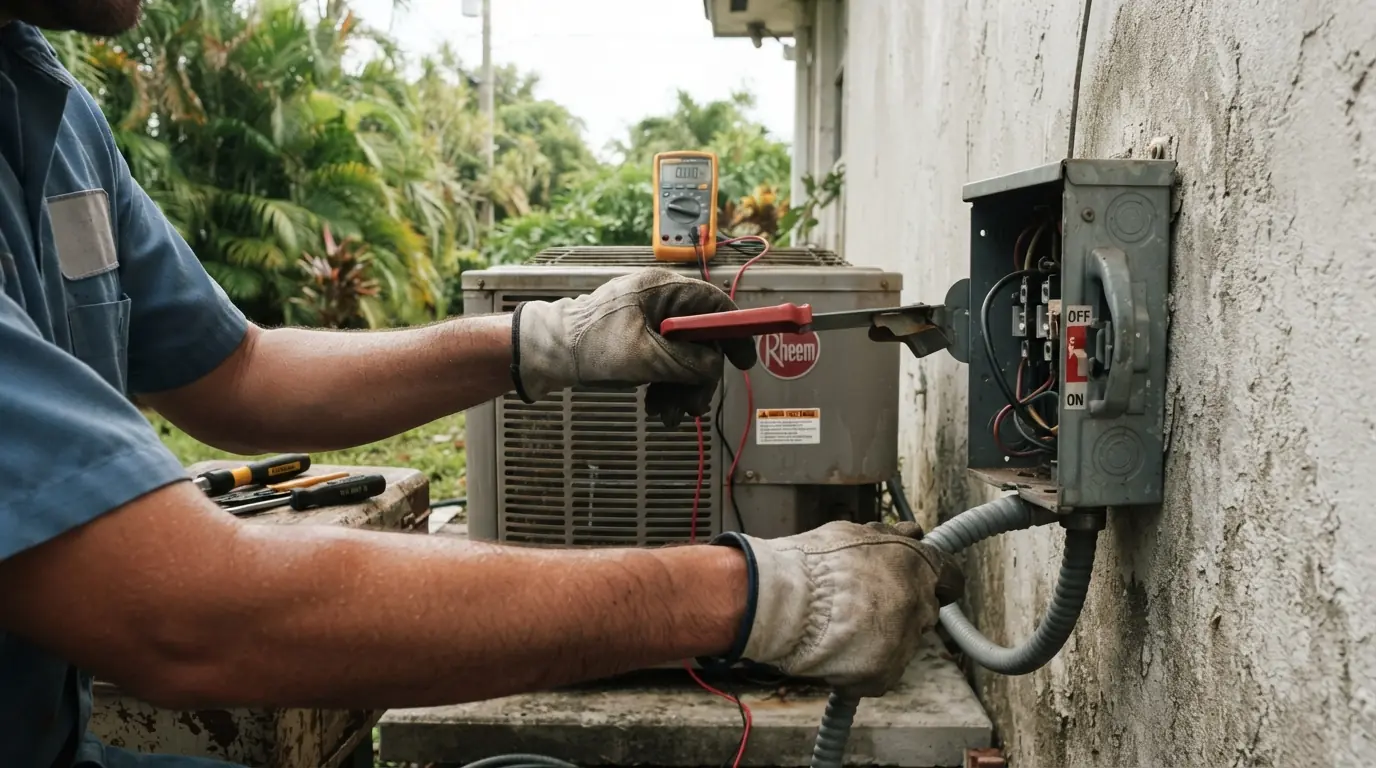
Close detail photo for hurricane AC prep in a Miami property: technicians hands at the during the outage step
FAQ

Hurricane AC questions

Should I turn off my AC during a hurricane?

Yes. Turn it off at the thermostat and the outdoor disconnect before the storm arrives and power starts fluctuating.

Should I cover my AC unit for a hurricane?

Do not wrap it in plastic, which traps moisture. Secure loose objects nearby instead.

What if my AC unit was flooded?

Leave it off and have it inspected. Flood water can damage electrical parts and the compressor.

Are hurricane tie-downs required in Miami?

Yes. Florida code requires outdoor units to be anchored against wind loads.

When should I restart my AC after a storm?

After power is stable, the unit is dry and undamaged, and debris is cleared. Restore the breaker, then turn it on at the thermostat.

Also in Maintenance and Tune-Ups

Related services

Condenser Replacement

Outdoor unit change-outs with code-rated tie-downs.

Learn more

AC Inspection

Pre-purchase and pre-hurricane system inspections.

Learn more

AC Tune-Up

Pre-summer service that keeps warranties valid.

Learn more

Hurricane season is here.

Get your AC checked and anchored before the next storm.

Call (786) 434-0401