Quick answer
An HVAC zoning system uses motorized dampers in the ductwork and multiple thermostats so one air conditioner can cool different parts of a house independently. In Miami it solves hot upstairs rooms, west-facing rooms that overheat in the afternoon, and additions that never match the rest of the home.
Written by Sylvia Denton, HVAC Guides Editor. Updated 2026-09-22.
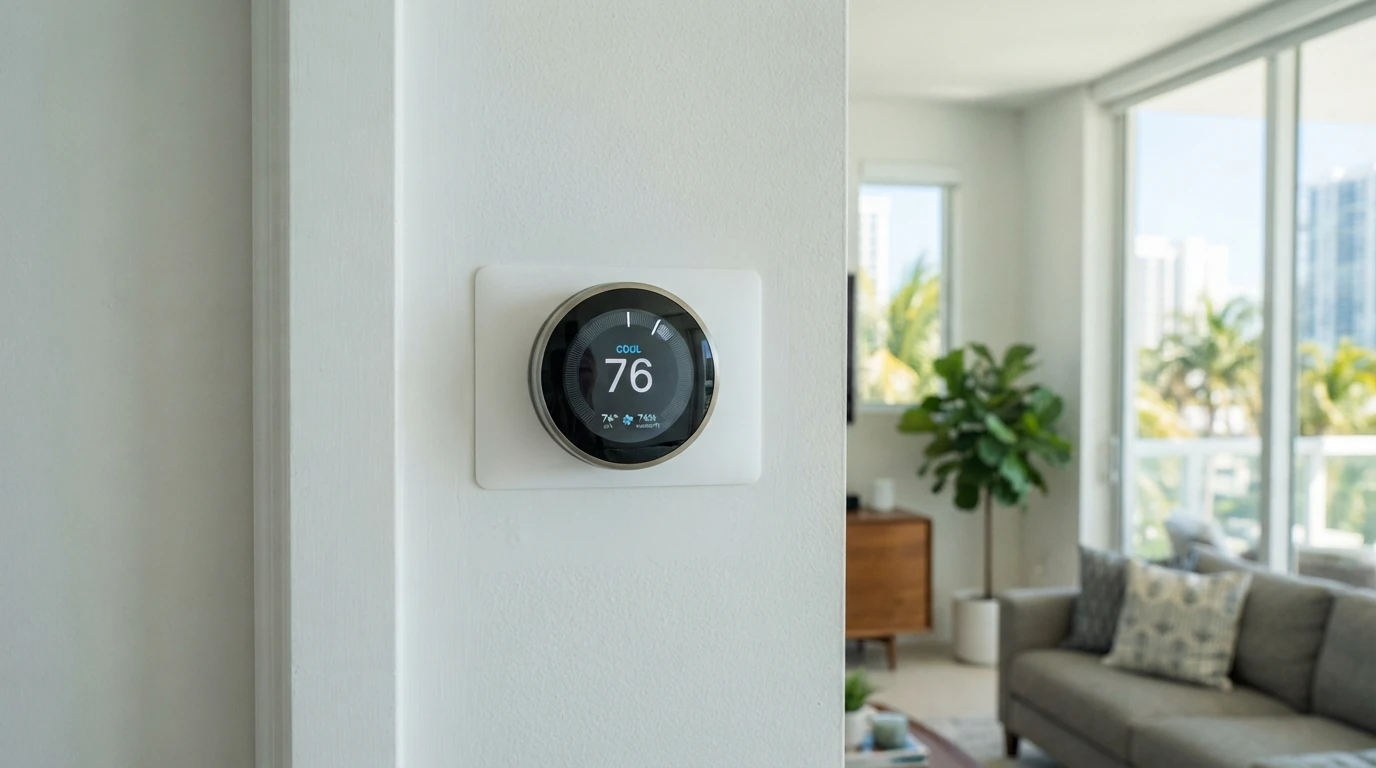
A single thermostat measures one spot and cools the whole house to satisfy it. In two-story Miami homes, heat rises and the upstairs runs several degrees warmer. In single-story homes, rooms facing west take the full afternoon sun. Additions and converted spaces often run hot too.
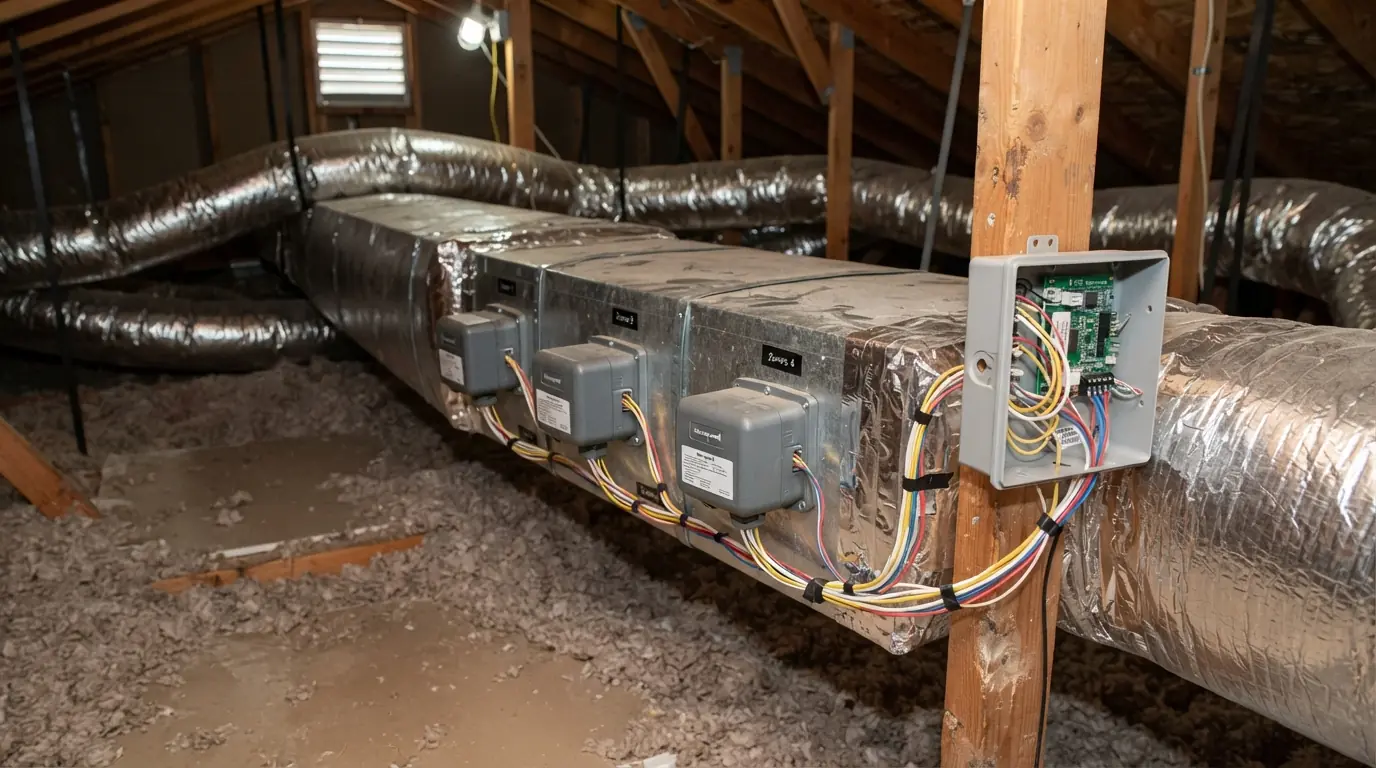
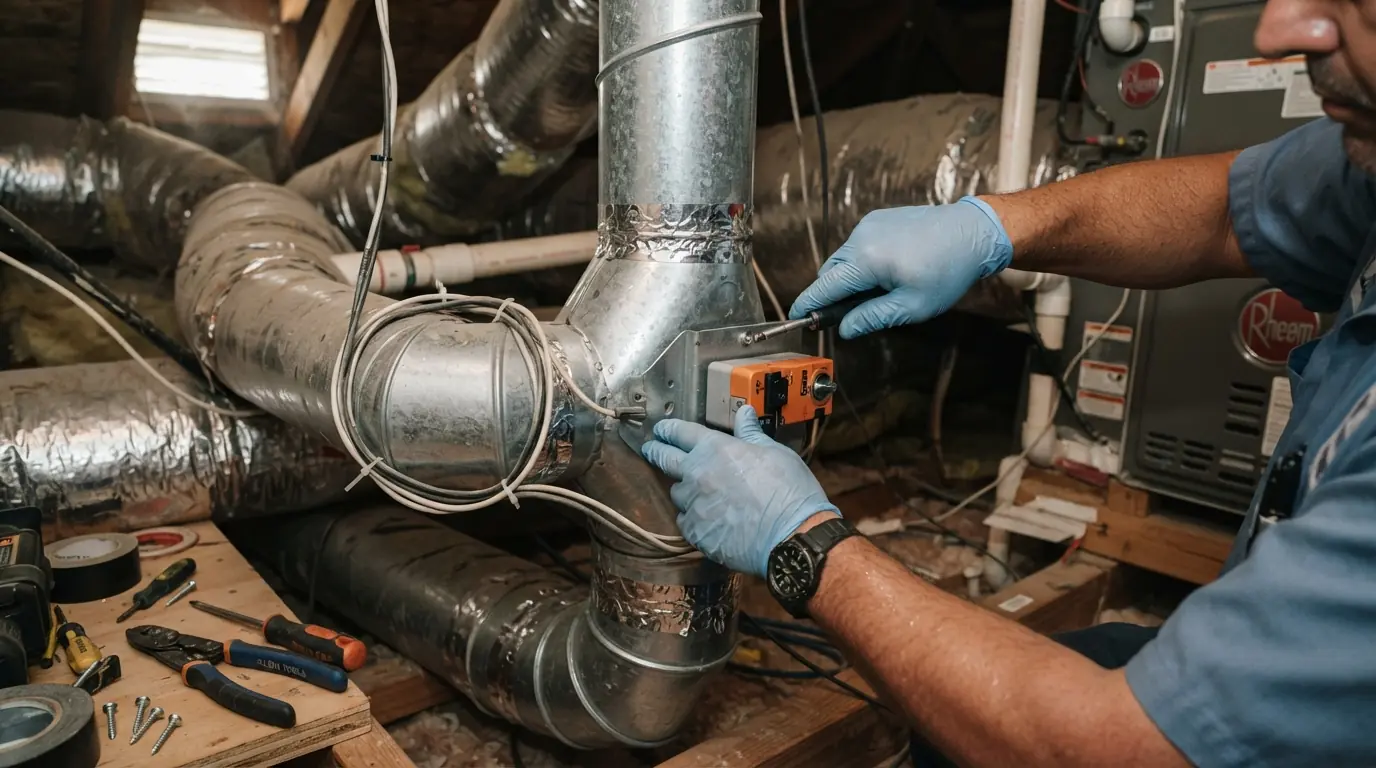
Zoning adds control. Motorized dampers in the ducts open and close based on thermostats in each zone, sending more air where it is needed and less where it is not. A zone control panel coordinates them with the air conditioner.
Zoning works best with a variable speed or two-stage system that can slow down when only one zone is calling. We design zoning around your equipment, ducts and the way you use the house.