Quick answer
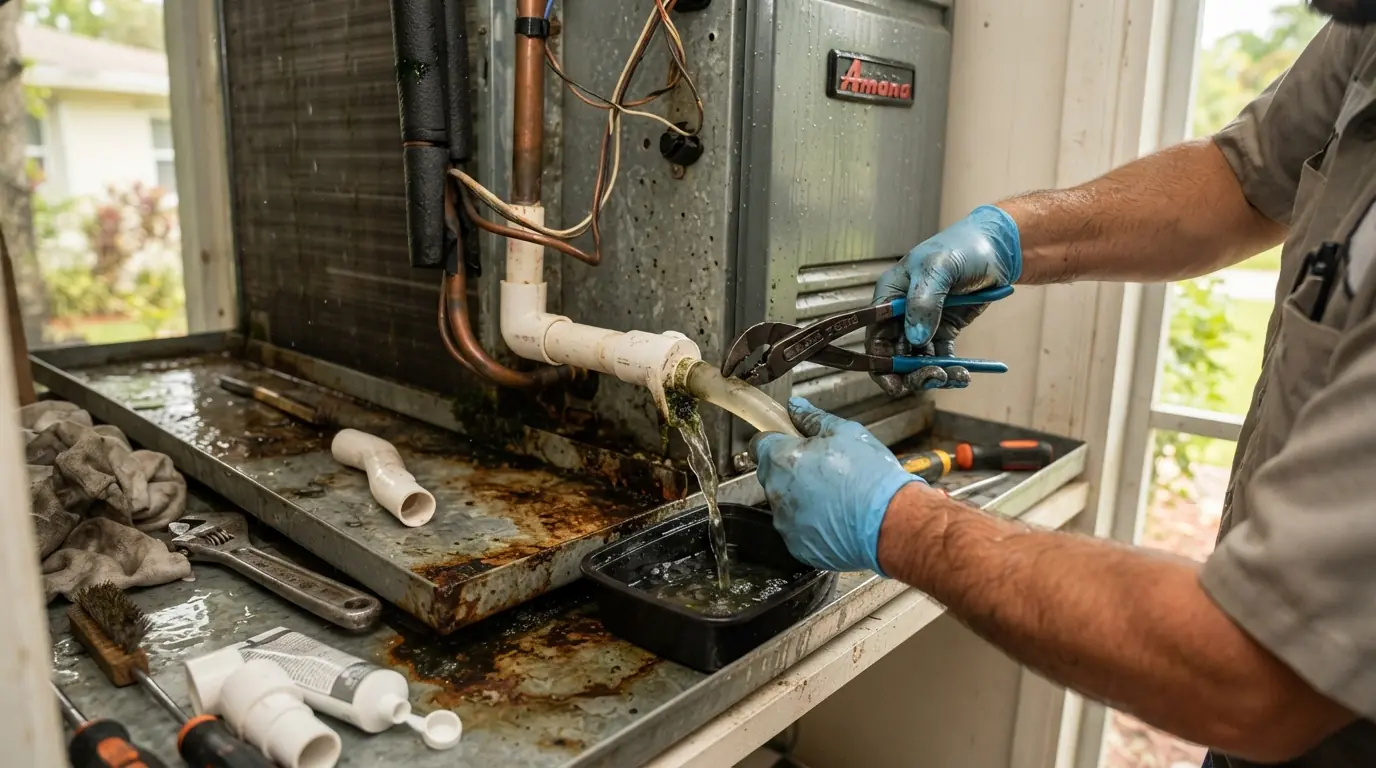
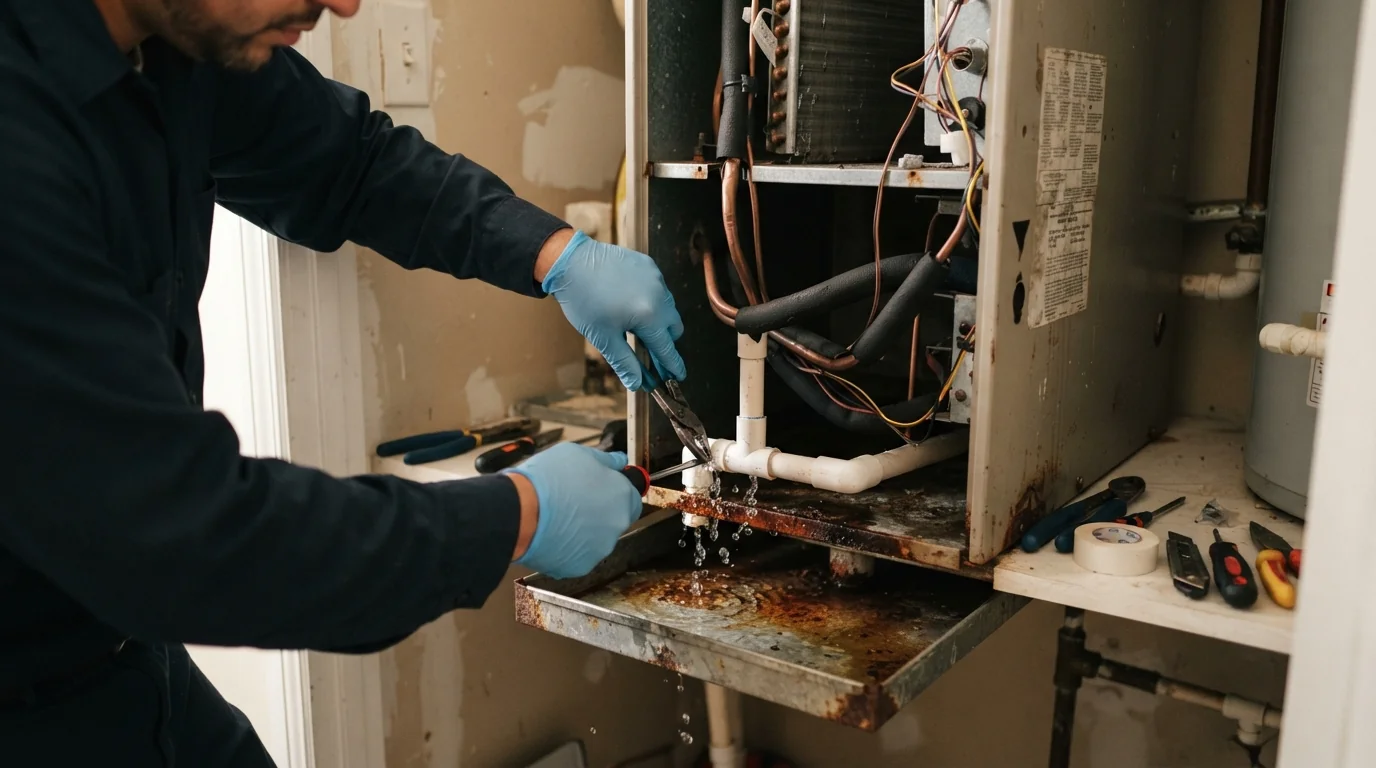
An AC leaking water in Miami is almost always one of five things: a clogged condensate drain, a cracked or rusted drain pan, a frozen evaporator coil that melts all at once, a disconnected drain fitting, or condensation dripping off uninsulated ducts in the attic. Turn the system off, put down towels, and have the source found the same day.
Written by Sylvia Denton, HVAC Guides Editor. Updated 2026-09-22.
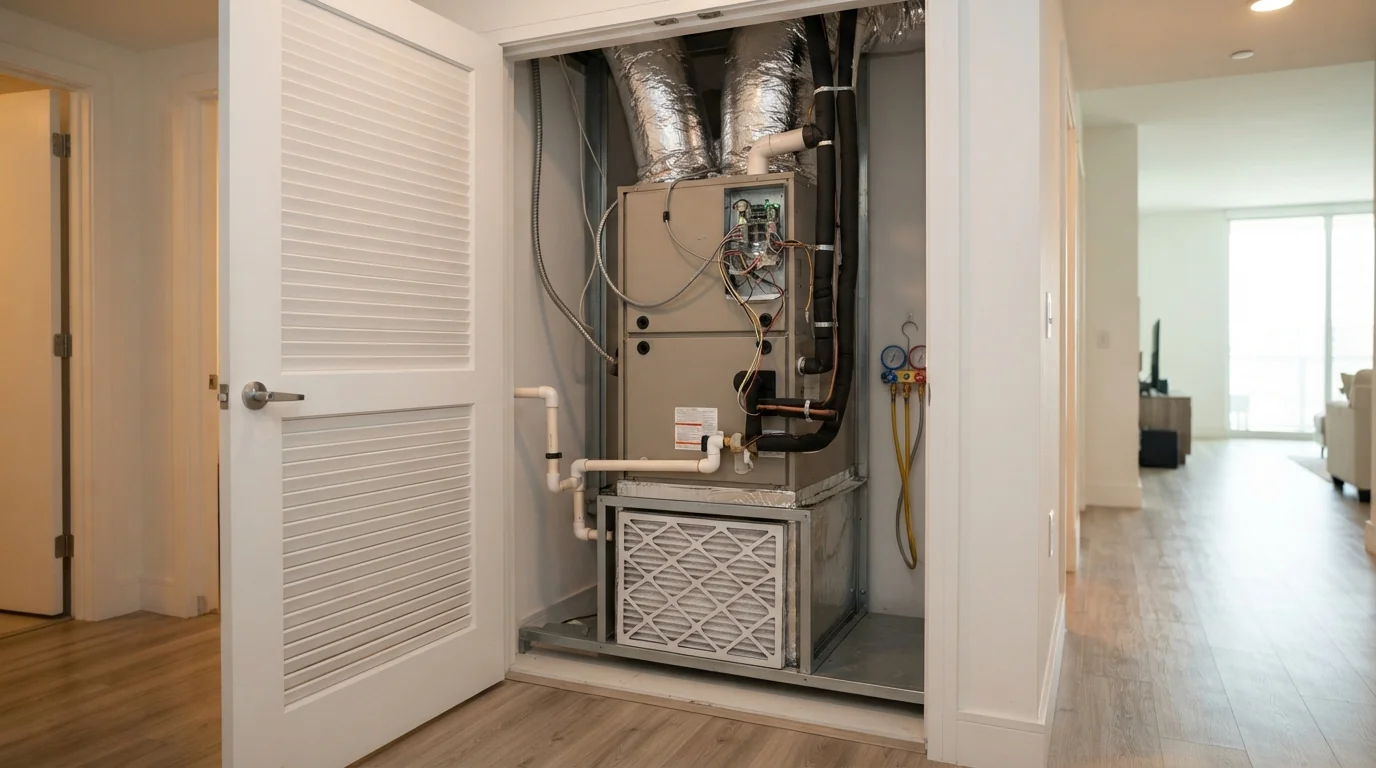
Water on the floor by the air handler closet usually shows up in the evening, after the system has been running hard all afternoon. The instinct is to mop and hope, but a leak that happened once will happen again tomorrow, and each time it soaks a little further into baseboards, subfloor or the ceiling below.
In Miami the air handler is making a lot of water. On a humid July afternoon a typical home system removes a gallon or more every hour, and all of it has to leave through a pan, a trap and a small PVC line. Any break in that path, from a slime plug to a hairline crack in a plastic pan, sends the water somewhere it should not go.
Our first job on a leak call is triage: stop the water, dry the pan, and find where it is escaping. The second is to check the damage around it, because wet insulation and drywall in a closed closet grow mold within a couple of days in South Florida humidity.