Quick answer
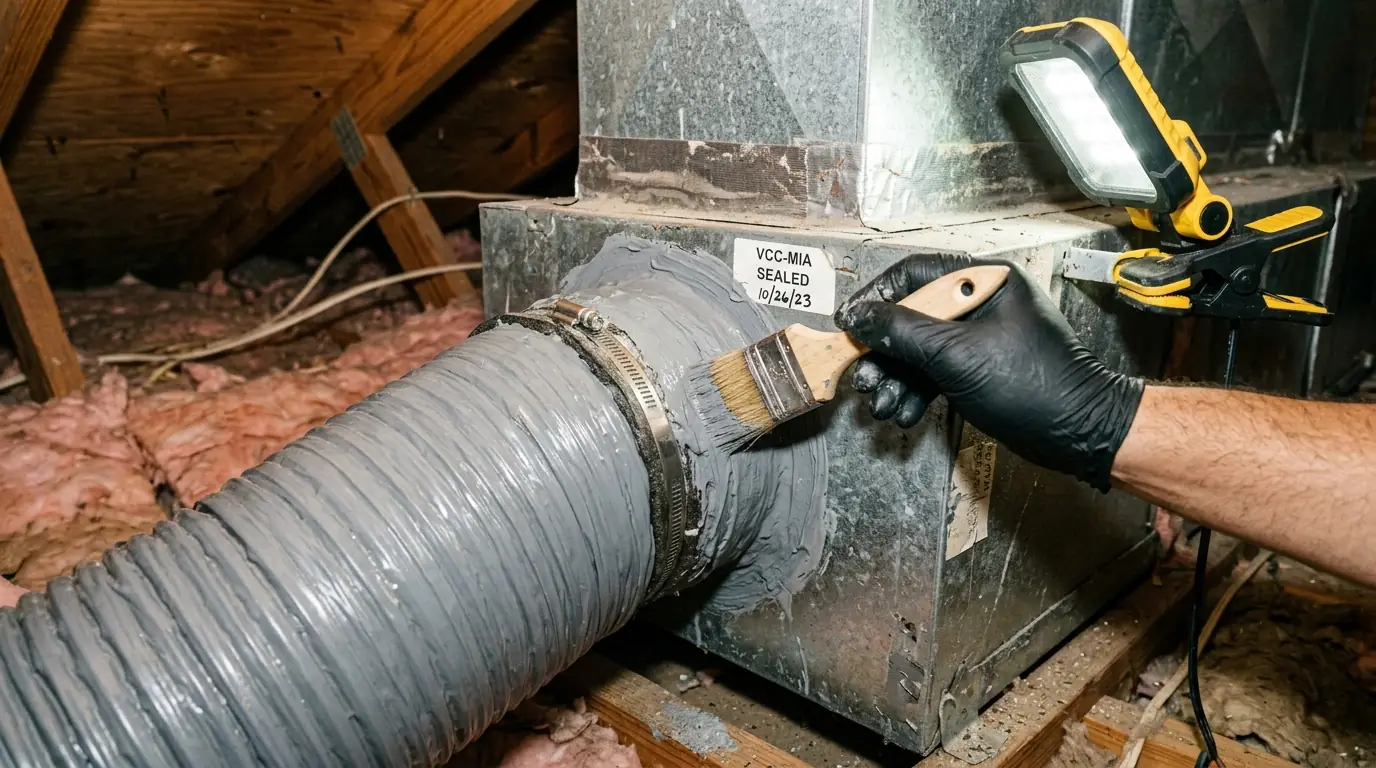
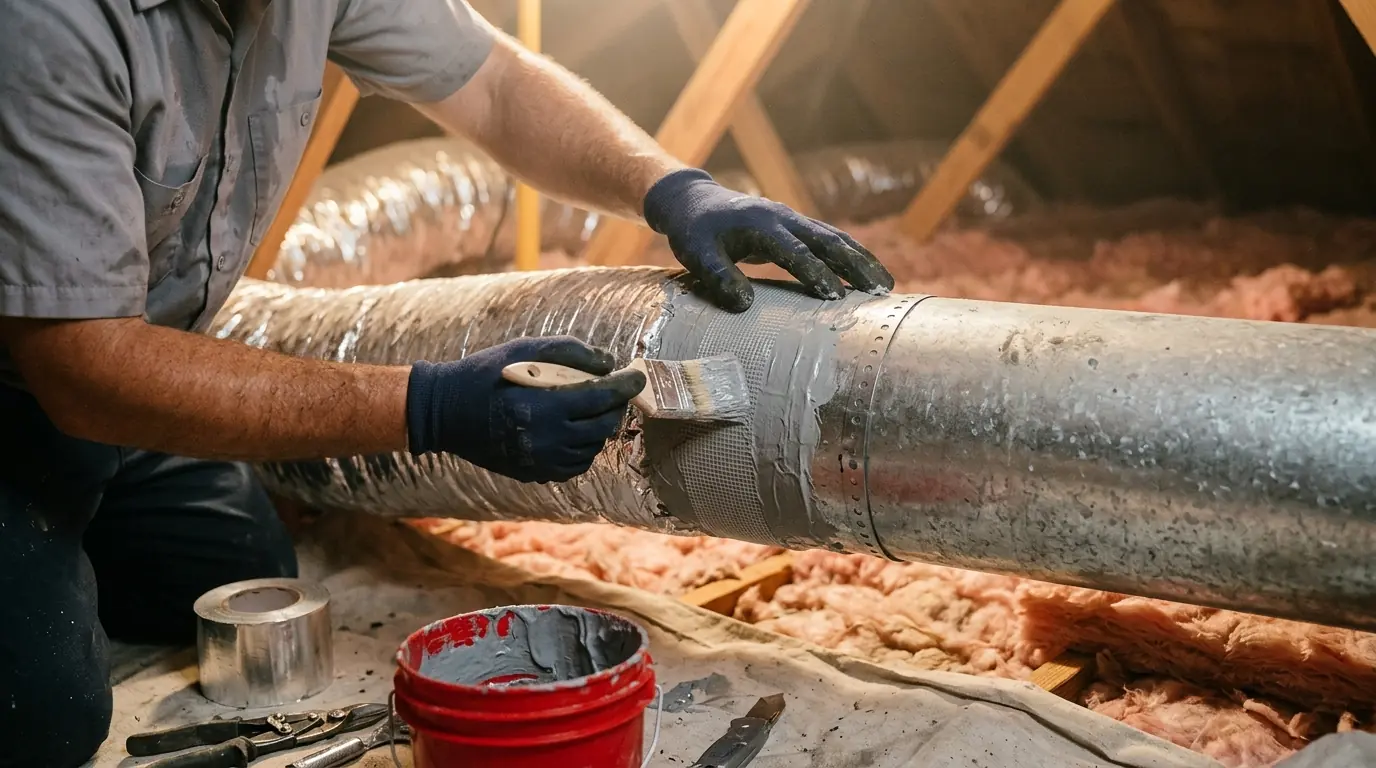
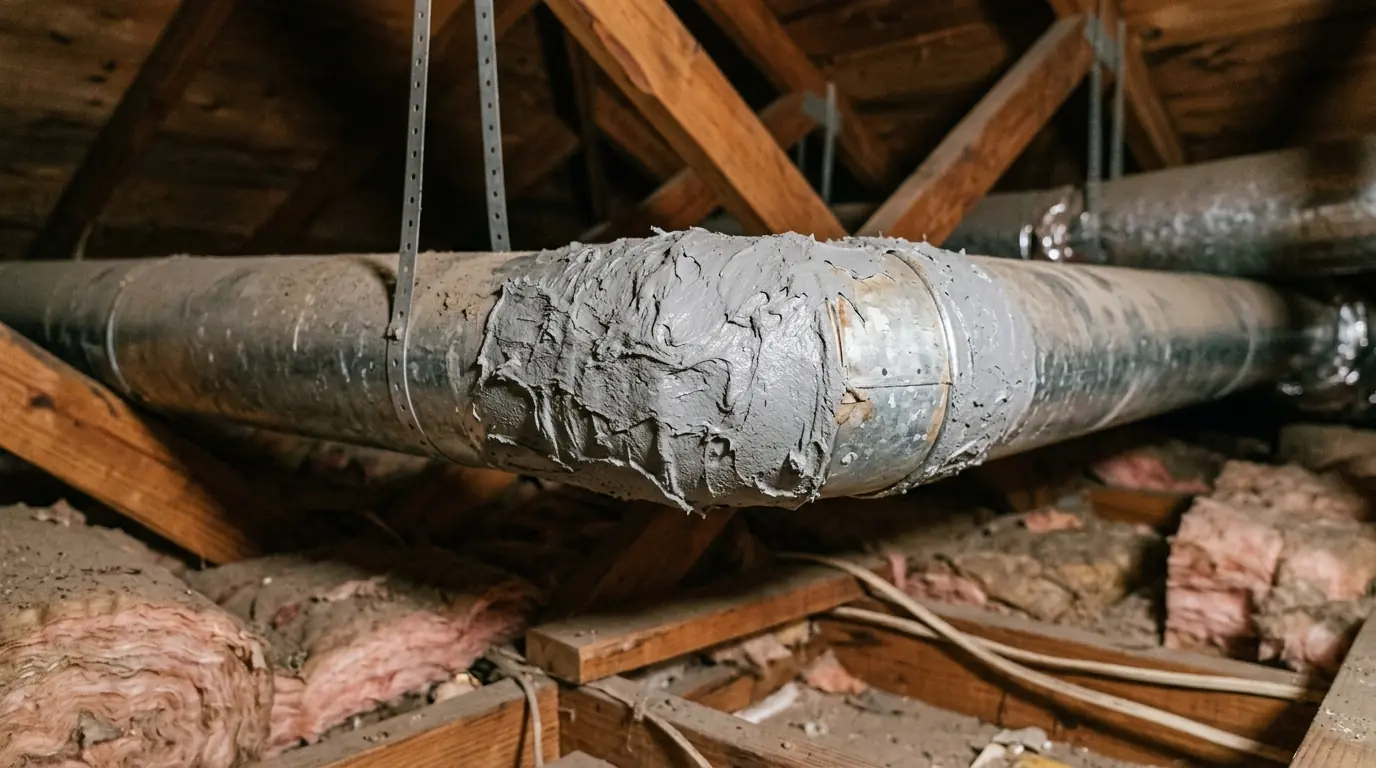
Duct sealing closes leaks at joints, seams, boots and plenum connections using mastic, rated foil tape or aerosol sealant applied from inside the ducts. In Miami it reduces cooling lost to hot attics, cuts dust and humidity pulled in from the attic, and helps the system dehumidify and cool evenly.
Written by Sylvia Denton, HVAC Guides Editor. Updated 2026-09-22.
Duct leakage is one of the most common hidden energy losses in Miami homes. Supply leaks push cool, dry air into the attic. Return leaks pull hot, humid, dusty attic air into the system. Both make the air conditioner work harder, and return leaks in particular add moisture and dust to the house.
Most leaks are at connections: where branches meet the plenum, where flex connects to ceiling boots, where the air handler meets the supply and return, and along seams of older duct board. Taped connections are especially prone, because standard tape fails in attic heat.
We seal accessible joints by hand with mastic, which stays flexible and bonds permanently. Where leaks are spread throughout or hard to reach, aerosol sealing pressurizes the duct system and seals leaks from the inside. Before and after measurements show the improvement.