Quick answer
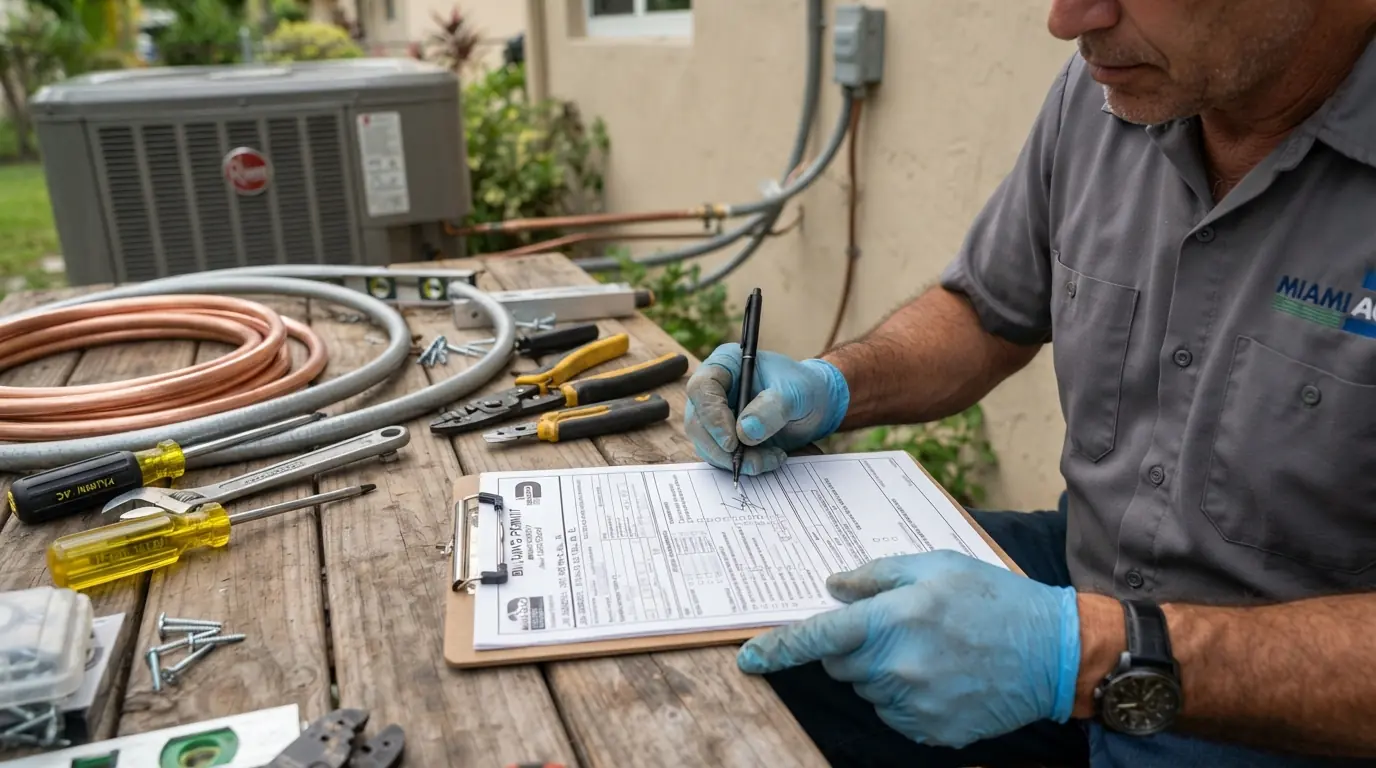
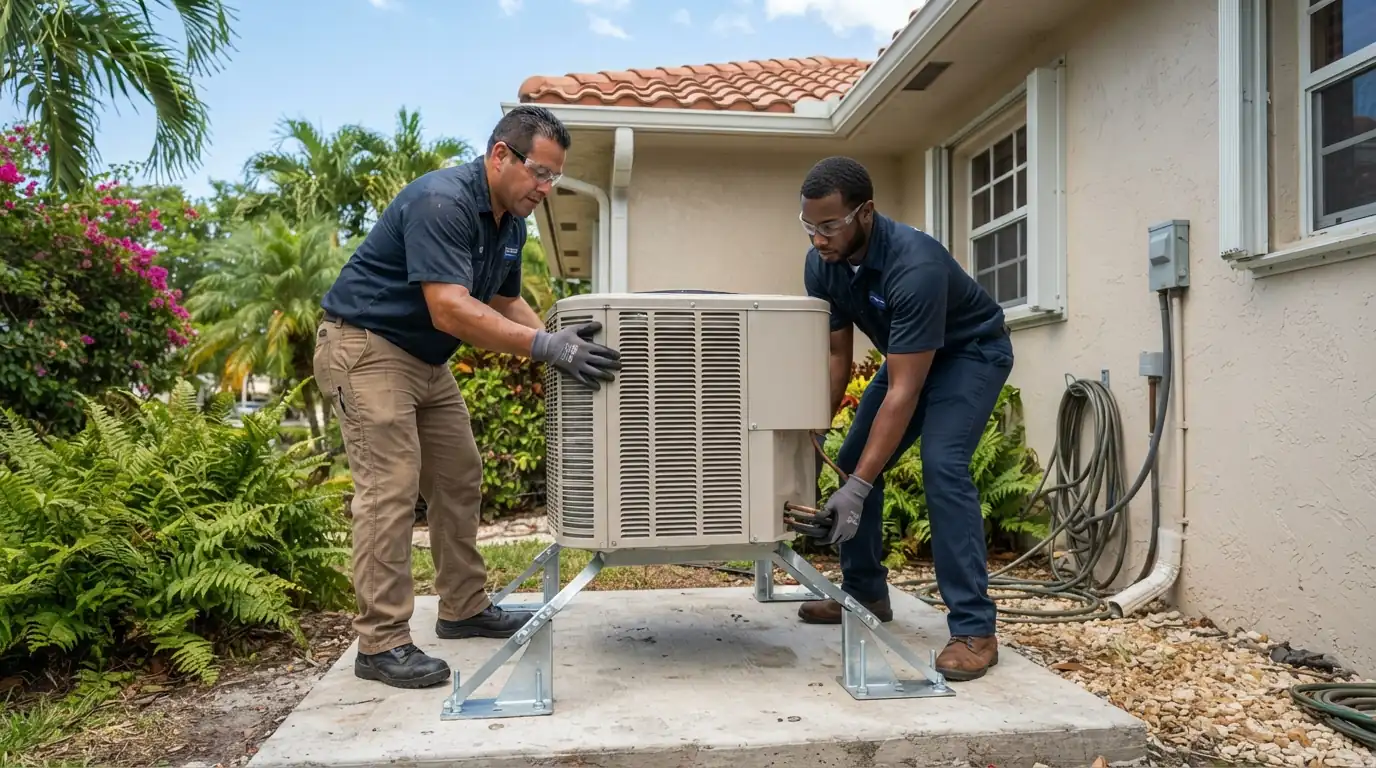
AC installation in Miami covers a load calculation for the home, equipment selection that meets the 2023 federal SEER2 minimums for the Southeast, a Miami-Dade mechanical permit, installation of the condenser and air handler with Florida Building Code tie-downs, a proper vacuum and charge, and a final inspection. Most single-system installs finish in one day.
Written by Sylvia Denton, HVAC Guides Editor. Updated 2026-09-22.
Installing a new system is where most long-term problems start or end. An oversized unit cools the air too fast to dry it and leaves a Miami house cold and clammy. An undersized one runs all afternoon and never catches up. Ductwork that does not match the new equipment chokes airflow and wastes the efficiency you paid for.
We start with a Manual J load calculation using the real house: square footage, window area and direction, insulation, attic condition and how many people live there. That tells us the tonnage. Then we look at the ducts, the electrical supply and where the equipment can go, and give you written options at two or three efficiency levels.
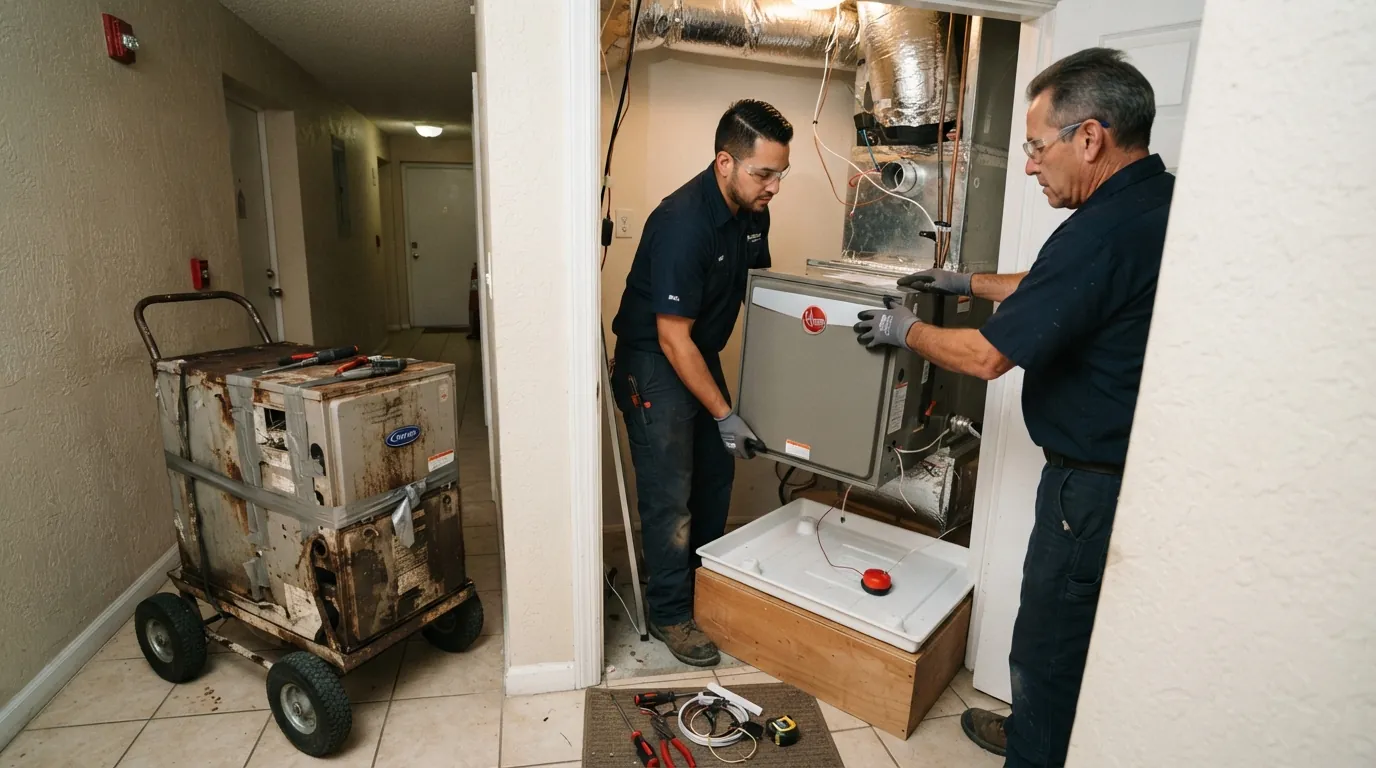
On install day the old equipment is recovered and removed, the new air handler and condenser are set, the line set is replaced or flushed, the system is pressure tested and pulled into a deep vacuum, and the refrigerant is charged by weight. The permit inspection follows, and you get the paperwork.