Quick answer
A ductless mini-split pairs an outdoor inverter condenser with one or more indoor units mounted on a wall or ceiling, connected by a small refrigerant line through a three-inch hole. In Miami they are ideal for additions, garage conversions, efficiencies, rooms the central system cannot reach, and older homes without ductwork.
Written by Sylvia Denton, HVAC Guides Editor. Updated 2026-09-22.
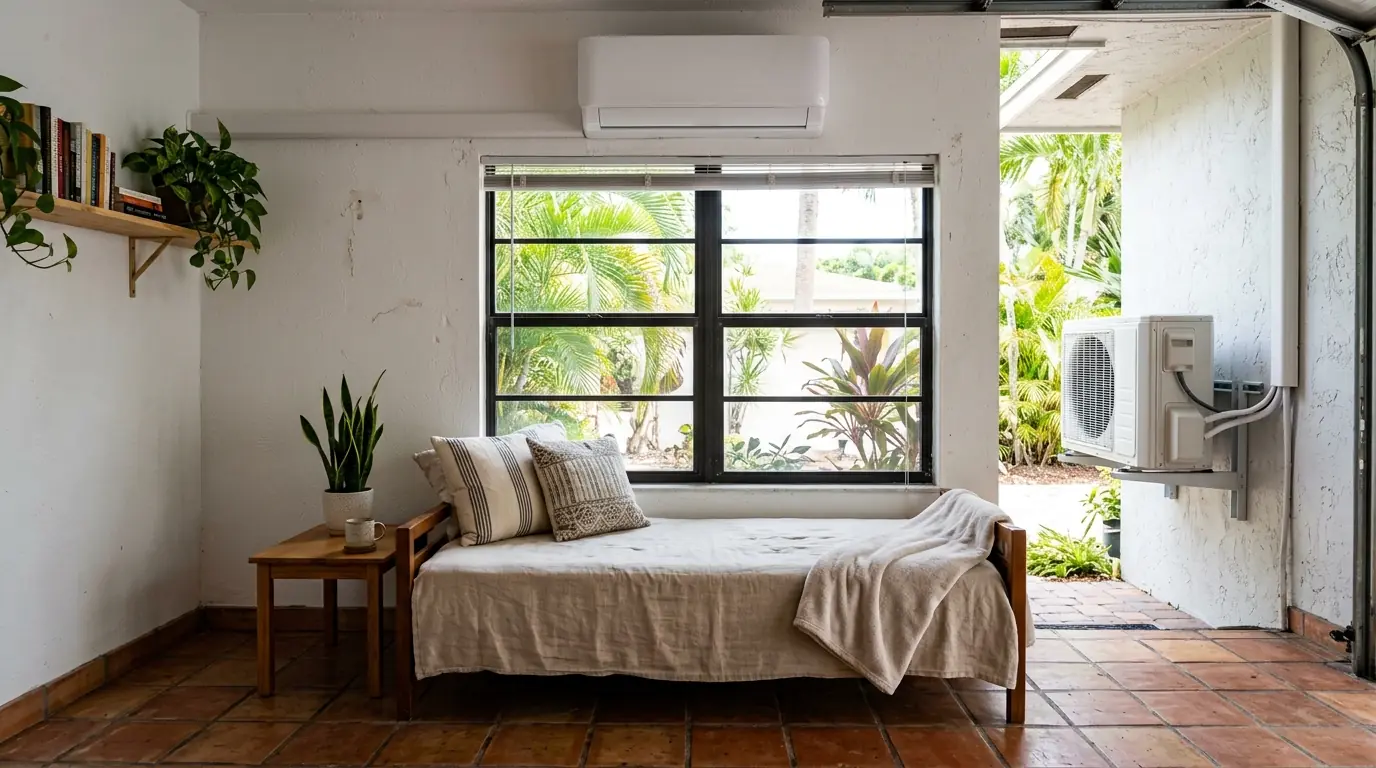
Mini-splits solve a problem central systems handle badly: a space that is too far from the air handler, was never on the duct system, or has a completely different use from the rest of the house. Extending ducts into a converted garage in a 1960s Westchester home often means cutting into ceilings and overloading an air handler that was already at its limit. A mini-split cools that space on its own without touching the main system.
Modern units are inverter driven, which means the compressor speeds up and slows down instead of switching on and off. In Miami that matters for two reasons: they are very efficient, often 20 SEER2 or more, and they run long enough at low speed to pull moisture out of the room. Most have a dedicated dry mode for muggy days.
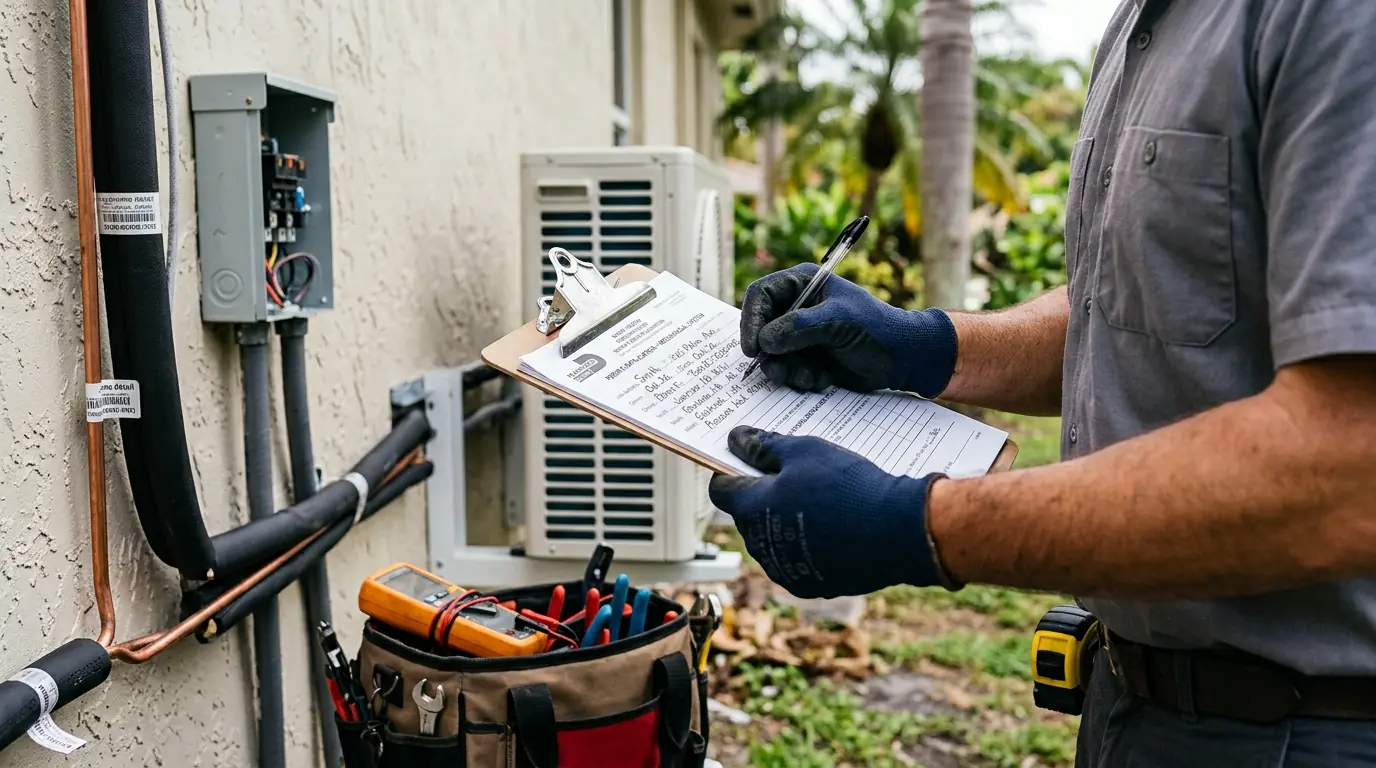
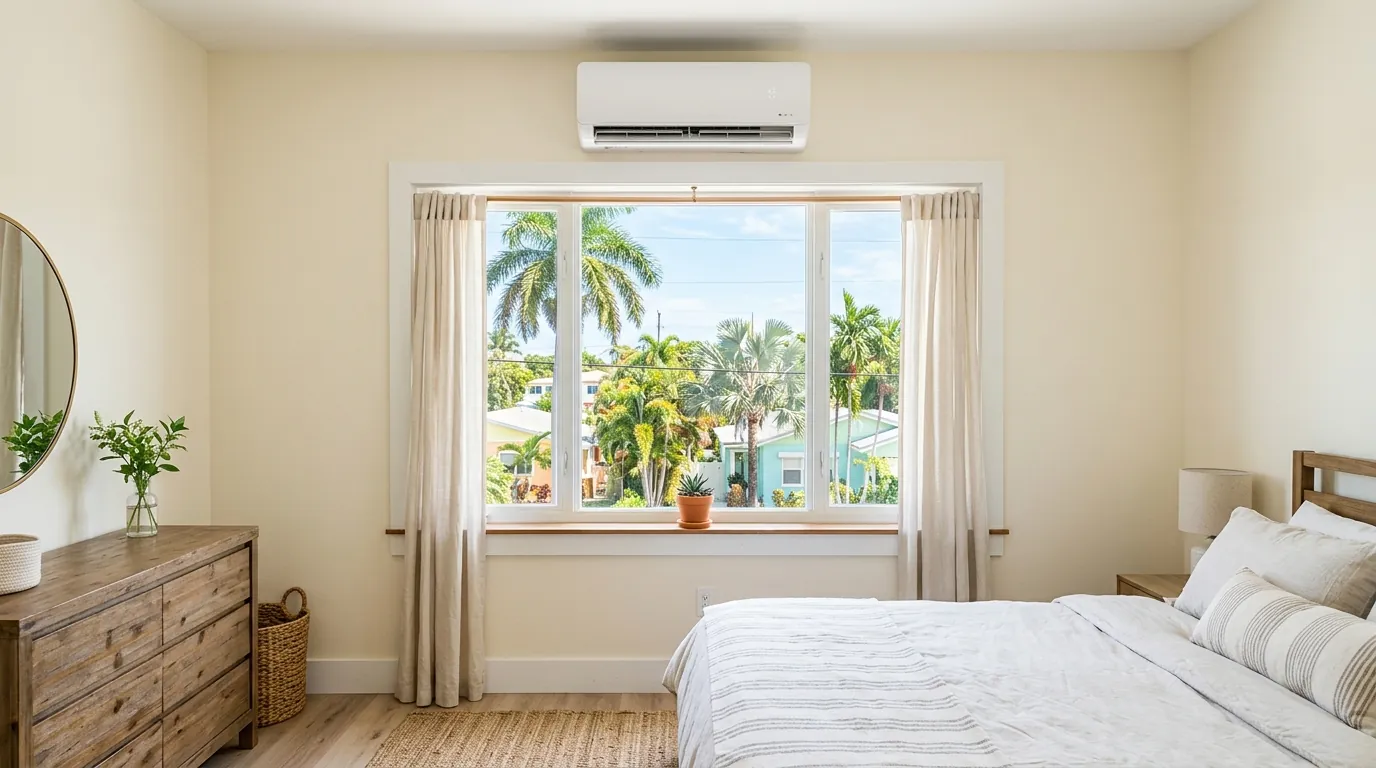
The design is where installs succeed or fail. The indoor head has to be sized to the room and placed so air reaches the whole space without blowing straight at a bed or desk. The line set and condensate drain need a clean route, and the outdoor unit needs a stable, anchored spot with room to breathe.