Skip to content
Drain line calls answered 24/7

AC drain line cleaning in Miami, FL

Miami air conditioners pull gallons of water out of the air every day, and that water has to leave through a small PVC line that algae loves. When it clogs, the system shuts off or the closet floods. We clear it the same day.

  • Answered 24/7
  • Same-day repair visits
  • Miami-Dade and Broward
  • Written price first

We repair and install Carrier, Trane, Lennox, Daikin, Mitsubishi Electric and every other major brand found in Miami homes.

CarrierTraneLennoxRheemGoodmanDaikinMitsubishi ElectricAmerican StandardBryantRuudFujitsuLGYorkAmanaCarrierTraneLennoxRheemGoodmanDaikinMitsubishi ElectricAmerican StandardBryantRuudFujitsuLGYorkAmanaCarrierTraneLennoxRheemGoodmanDaikinMitsubishi ElectricAmerican StandardBryantRuudFujitsuLGYorkAmana

Quick answer

AC drain line cleaning clears algae, sludge and debris from the condensate line that carries water away from the indoor coil. In Miami the line clogs more often than anywhere in the country because it stays warm and wet for months, so a flush, vacuum and treatment, plus a float switch test, is the most common summer AC service we perform.

Written by Sylvia Denton, HVAC Guides Editor. Updated 2026-09-22.

Every hour an air conditioner runs in Miami summer, the evaporator coil condenses water out of the humid air. On a typical July day a three-ton system can move eight to fifteen gallons through its drain line. That water runs through a three-quarter inch PVC pipe that is dark, warm and never dries out between May and October, which is exactly what algae and bacterial slime need to grow into a solid plug.

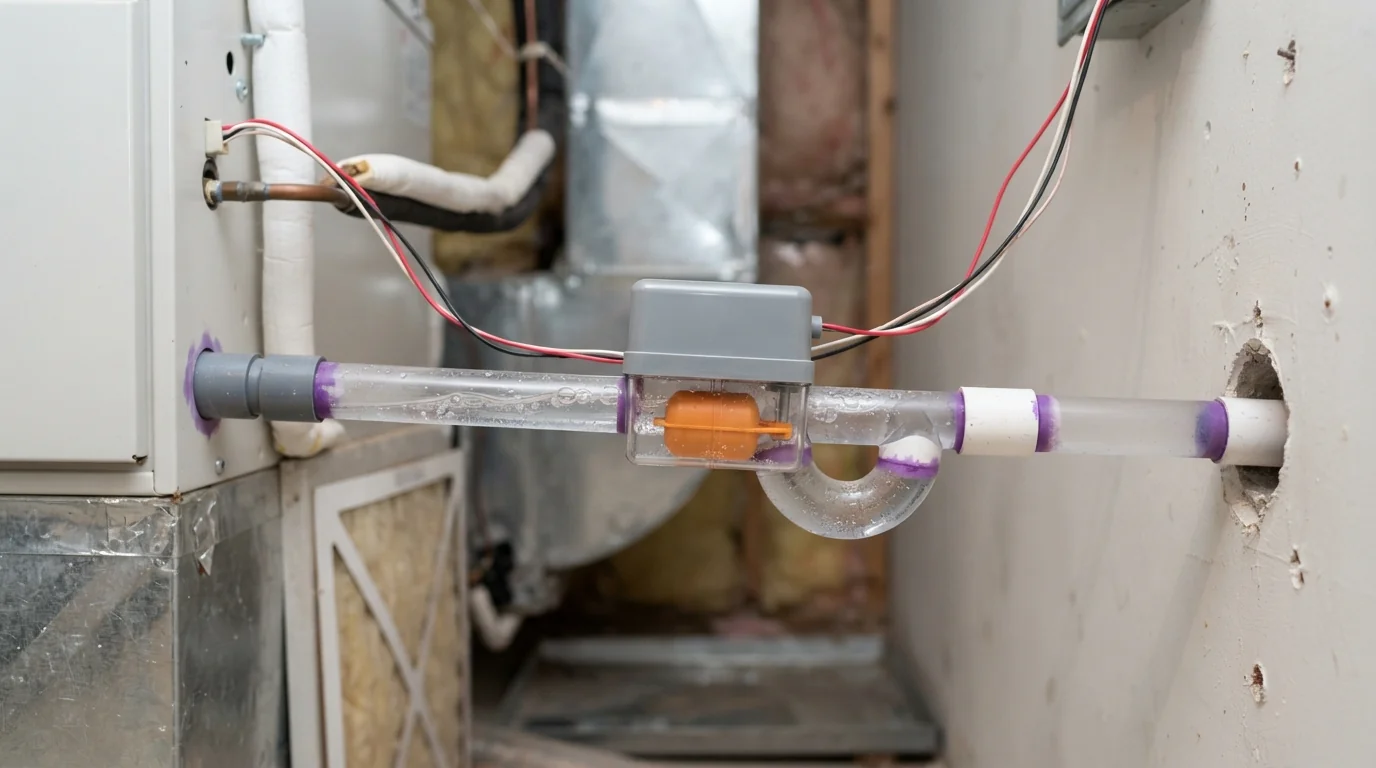
When the line blocks, one of two things happens. If there is a working float switch in the pan or on the line, it cuts power to the system and the house starts warming up. If there is no switch, or it has failed, the pan overflows and water finds its way into the closet floor, the drywall under an attic air handler or the ceiling of the unit below a condo.

A proper clearing does more than blow air through the pipe. We vacuum the clog out from the exterior termination, flush the line from the air handler side, clean the trap and the pan, treat the line to slow regrowth, and test the float switch by filling the pan until it trips.
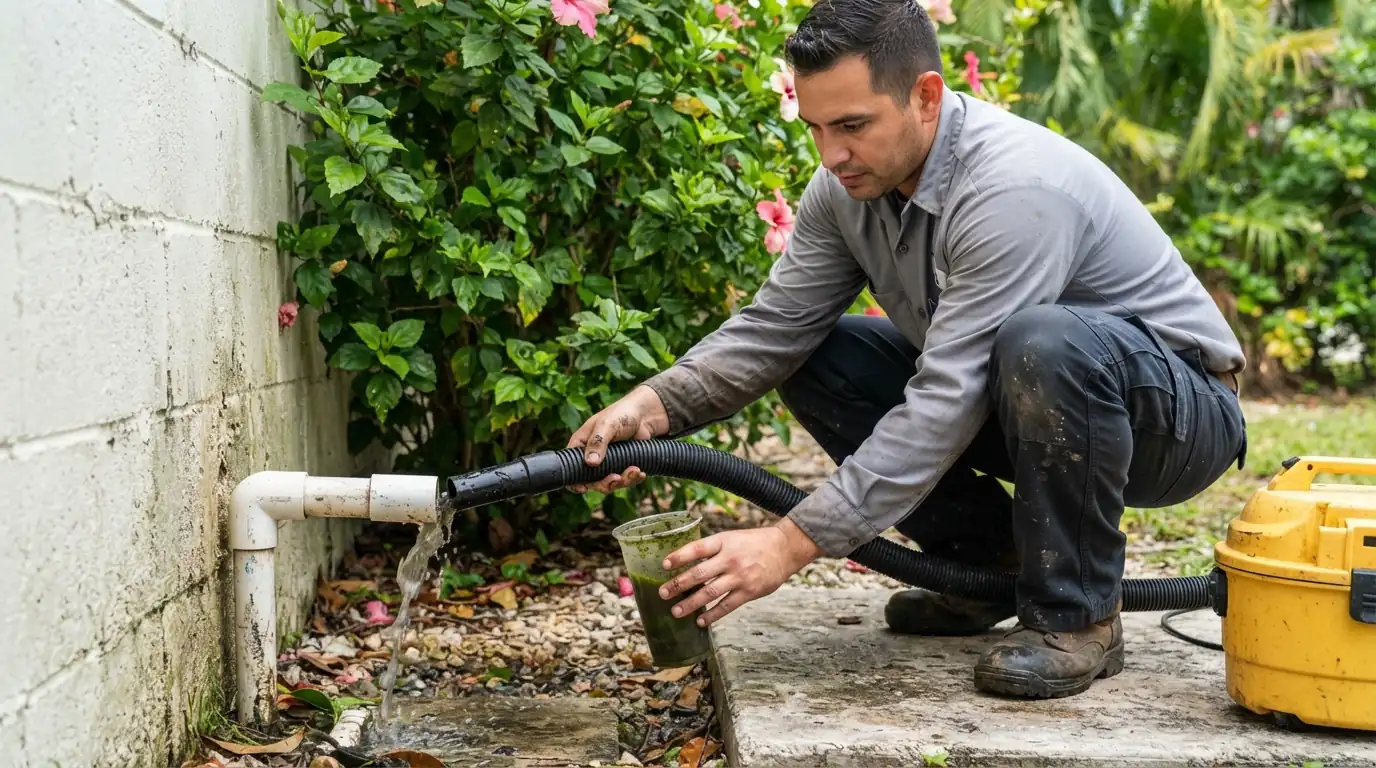
Technician using a wet vac hose on a white PVC condensate drain outlet beside a CBS wall and hibiscus hedge in a Miami side yard
Warning signs

Signs your condensate line is clogged

AC shuts off for no clear reason

The thermostat is calling, but the air handler and condenser both stay off. A tripped float switch is the likely cause.

Water in the drain pan

Standing water in the secondary pan under an attic unit, or in the closet pan, means the primary line is not draining.

Wet floor or baseboard

Water spreading from the air handler closet across tile or into carpet.

Ceiling stain under the attic unit

A brown ring on the ceiling below an attic air handler is an overflow that has already happened more than once.

Musty smell at the vents

Stagnant water and slime in the pan and trap send a sour or mildew smell through the supply air.

Nothing dripping outside

On a hot afternoon the drain outlet by the foundation should be dripping steadily. A dry outlet with the AC running means a blockage.

Gurgling at the air handler

Air being pulled through a partly blocked trap makes a bubbling sound while the blower runs.

Process

How the drain line gets cleared

  1. 1

    Find the full path

    We trace the line from the air handler through the trap to where it terminates outside or into a plumbing drain.

  2. 2

    Vacuum the clog

    A wet vac on the exterior end pulls the plug out in one piece rather than pushing it deeper.

  3. 3

    Flush and clean

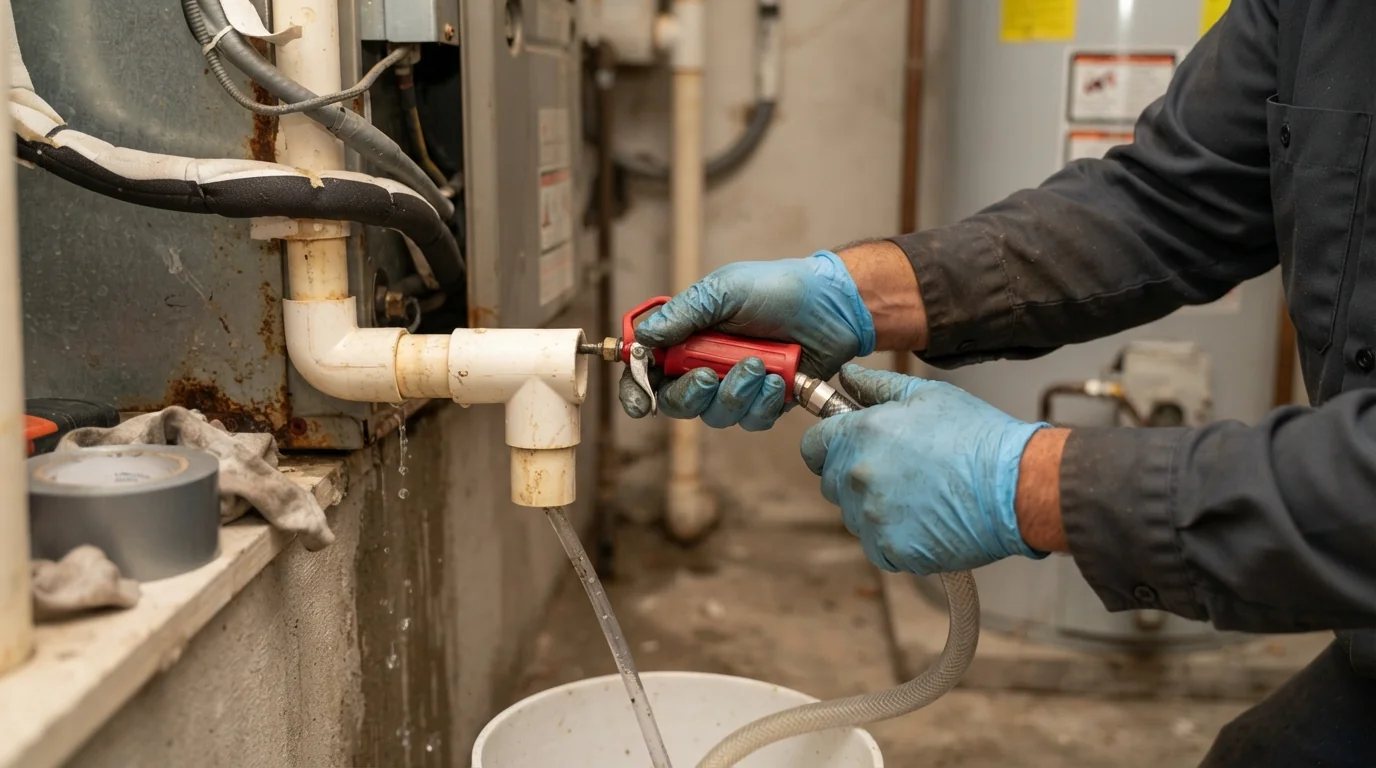
    The line is flushed from the indoor side, the trap cleaned, and the pan emptied, scrubbed and dried.

  4. 4

    Treat the line

    An approved treatment slows algae regrowth. Where it helps, we add a cleanout tee so future flushing is easy.

  5. 5

    Test the float switch

    The pan is filled until the switch trips and shuts the system down, proving it will protect your ceiling next time.

Pricing

What drain line service costs in Miami

$135 to $245Standard drain line clear

Vacuum, flush, trap clean and float test on an accessible line.

$185 to $315Clear plus pan cleaning

Includes scrubbing a slimed pan and treating the coil drain area.

$145 to $265Float switch replacement

New safety switch on the pan or the line, wired and tested.

$95 to $185Cleanout tee installation

Adds a capped port so the line can be flushed without cutting pipe.

$325 to $785Rusted pan replacement

Secondary pans under attic units rust through in Miami humidity.

Typical 2026 Miami-Dade ranges, not a quote. Condo lines that tie into a building riser or run through a neighbor's wall can take longer, and we will tell you before starting.

Local context

Why Miami drain lines clog so often

The simple answer is climate. Miami's dew point sits in the 70s for most of the cooling season, so the coil is wet from morning to night and the drain line never gets a chance to dry out. Warm stagnant water in a dark pipe grows algae in weeks, not months. That is why a line that was clear in April can be solid by the Fourth of July.

Building type shapes the risk. In older Flagami, Westchester and Coral Way homes, lines often run long distances under slabs or out through the attic with too little slope, and they collect sludge faster. Air handlers in Kendall and Doral garages usually drain to the exterior near the driveway, where lawn crews can crush or bury the outlet. In Brickell and Miami Beach condos the line typically ties into a shared building riser, and an overflow does not just stain your ceiling; it can reach the unit below.

Flushing the line with a cup of distilled vinegar every month in summer helps, but it does not replace a full clearing and a float switch test once or twice a year.

Close detail photo for AC drain line cleaning in a Miami property: technicians hands at the flush and clean step
Checklist

Included in every drain line visit

  • Trace of the full drain path
  • Vacuum clearing from the outlet
  • Flush from the air handler side
  • Trap cleaning
  • Primary pan clean and dry
  • Secondary pan inspection for rust
  • Algae treatment
  • Float switch trip test
  • Photos of the line before and after
FAQ

Drain line questions

How often should an AC drain line be cleaned in Miami?

At least once a year as part of a tune-up, and twice a year for attic air handlers or homes that have had an overflow. A monthly vinegar flush between visits helps keep algae down.

Why did my AC shut off by itself?

If water backs up, the float switch cuts power to protect your home. Clear the line and the system will usually restart. We test the switch while we are there.

Can I clear the line myself?

A wet vac on the outside outlet often pulls a clog free, and a vinegar flush helps. If water keeps coming back or the pan is full, the trap or the line inside the wall may be blocked and needs a proper cleaning.

Will a clogged drain damage my AC?

Standing water rusts pans, soaks insulation and grows mold in the air handler. An overflow can also ruin drywall, flooring and the ceiling below an attic unit.

Do I need a float switch?

Yes. Florida code requires overflow protection on air handlers above finished spaces, and in Miami it is the cheapest insurance you can put on the system.

Also in AC Repair

Related services

AC Leaking Water

Stopping water damage from a leaking air handler.

Learn more

Air Handler Mold Cleaning

Removing growth from coils, blowers and cabinets.

Learn more

AC Tune-Up

Pre-summer service that keeps warranties valid.

Learn more

Water in the closet or the AC shut off?

Drain line calls get same-day service across Miami-Dade, around the clock.

Call (786) 434-0401