
Quick answer
In 2026 a full split-system AC replacement in Miami-Dade typically costs about $6,500 to $11,000 for a 2 to 3 ton system and $8,650 to $14,600 for 3.5 to 5 tons at standard efficiency, including the permit. High-efficiency variable speed systems run roughly $11,450 to $18,300. Duct work, access and electrical upgrades add to the price; FPL rebates can reduce it.
Written by Sylvia Denton, HVAC Guides Editor. Updated 2026-09-22.
Typical 2026 price ranges
These are typical ranges we see in Miami-Dade for full split-system replacements, meaning a matched outdoor condenser and indoor air handler, with a Miami-Dade mechanical permit, removal of the old equipment and standard installation. They are not a quote; your home's details decide the final number.
- 2 to 3 ton, standard efficiency: about $6,480 to $10,900
- 3.5 to 5 ton, standard efficiency: about $8,650 to $14,600
- Two-stage, 17 to 18 SEER2: about $9,380 to $13,850 for a 3 ton system
- Variable speed, 19 to 22 SEER2: about $11,450 to $18,300
- Condo closet air handler only: about $2,480 to $4,350
What drives the price
Size is the first factor. Most Miami single-family homes need 3 to 4 tons, condos and townhomes often 2 to 2.5. The right size should come from a load calculation, not the old unit's label; many older Miami homes were oversized decades ago.
Efficiency is the second. Federal rules since 2023 require at least 14.3 SEER2 for new central AC in Florida. Each step up in efficiency costs more up front and saves more on every FPL bill, which matters in a city where the system runs close to 3,000 hours a year.
Access and location are the third. An attic air handler costs more to replace than a hall closet unit. Condo jobs add elevator time and association requirements. Rooftop condensers may need a hoist.
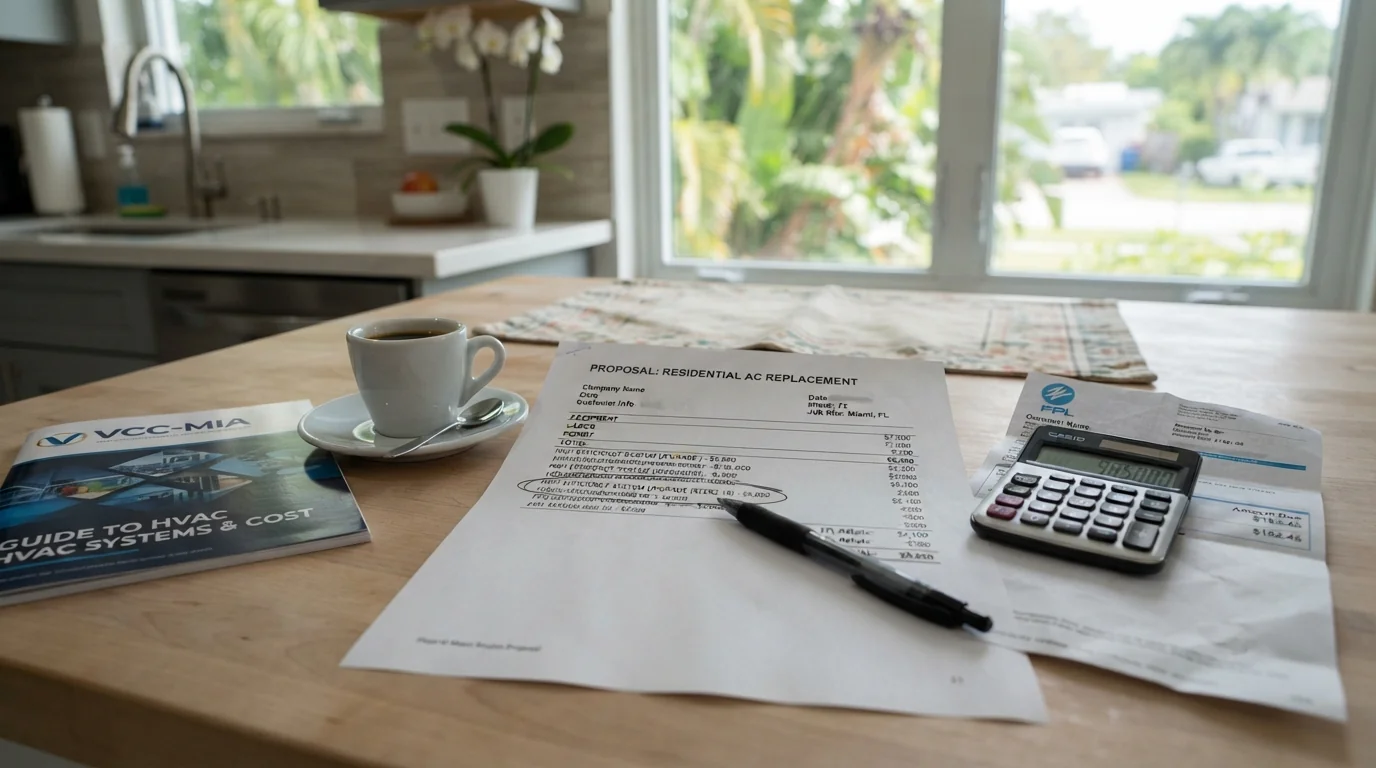
Costs people forget to ask about
A good quote includes these. A cheap quote often leaves them out, and they come back as change orders.
- The Miami-Dade mechanical permit and inspection.
- Code-rated hurricane tie-downs for the condenser.
- A new drain pan, trap and float switch.
- A new or flushed refrigerant line set.
- Electrical updates such as a new disconnect or breaker.
- Duct repairs or a new return if airflow is inadequate.
Rebates and incentives
FPL offers residential rebates on qualifying high-efficiency equipment installed through participating contractors. Manufacturers run seasonal promotions. If you choose a heat pump that meets federal efficiency criteria, it may also qualify for the federal energy efficiency tax credit. Ask which options on your quote qualify before you choose, and make sure the contractor submits the paperwork.
Repair or replace?
A simple rule helps: multiply the age of the system by the cost of the repair. If the result is more than about $5,000, replacement usually makes more sense. A 14-year-old unit facing an $1,800 coil replacement scores over $25,000. Systems still using R-22 refrigerant, units with corroded coastal coils, and systems that have needed repeated repairs also point toward replacement.
How to compare quotes
Line up quotes by the same size and efficiency, and check each one for the permit, tie-downs, drain safety, line set and warranty registration. Ask whether the tonnage came from a load calculation. The lowest number is not always the lowest cost once the missing items are added back in.
Need a technician instead of a guide? Call (786) 434-0401; we answer 24 hours a day across Miami-Dade.