Quick answer
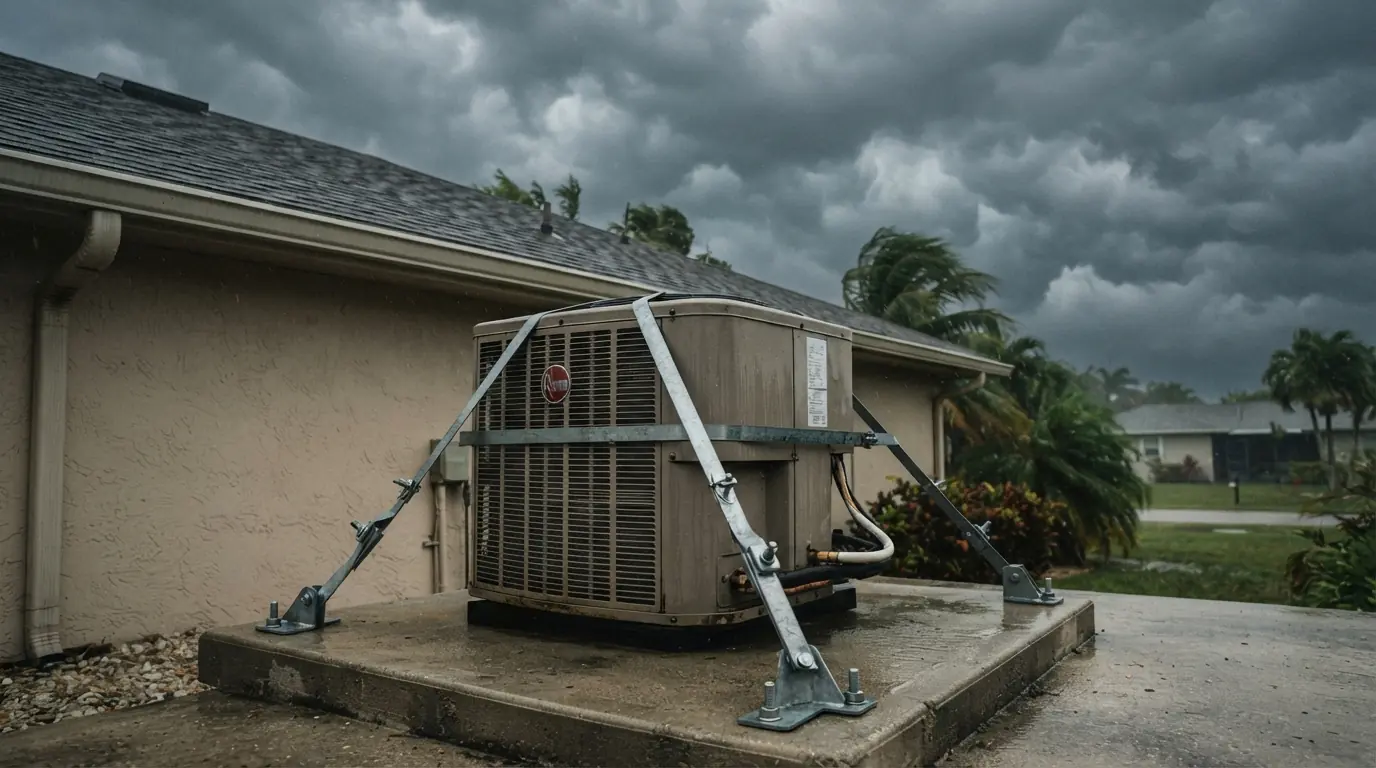
To prepare a Miami AC for hurricane season, confirm the condenser is anchored with code-rated tie-downs, add a surge protector at the outdoor disconnect, clear loose objects nearby, and consider an elevated stand in flood-prone areas. Turn the system off at the thermostat and breaker before a storm, and do not restart it if it sat in flood water.
Written by Sylvia Denton, HVAC Guides Editor. Updated 2026-09-22.
Why storms damage air conditioners
Atlantic hurricane season runs June 1 to November 30, and South Florida sees most of its activity from August through October. After storms, AC damage we see falls into three groups: condensers that shifted or tipped because tie-downs were missing or rusted, units that sat in flood water, and compressors and control boards damaged by power surges when the grid came back.
Before the season
Spring is the right time. Every item here is cheap compared with replacing a condenser.
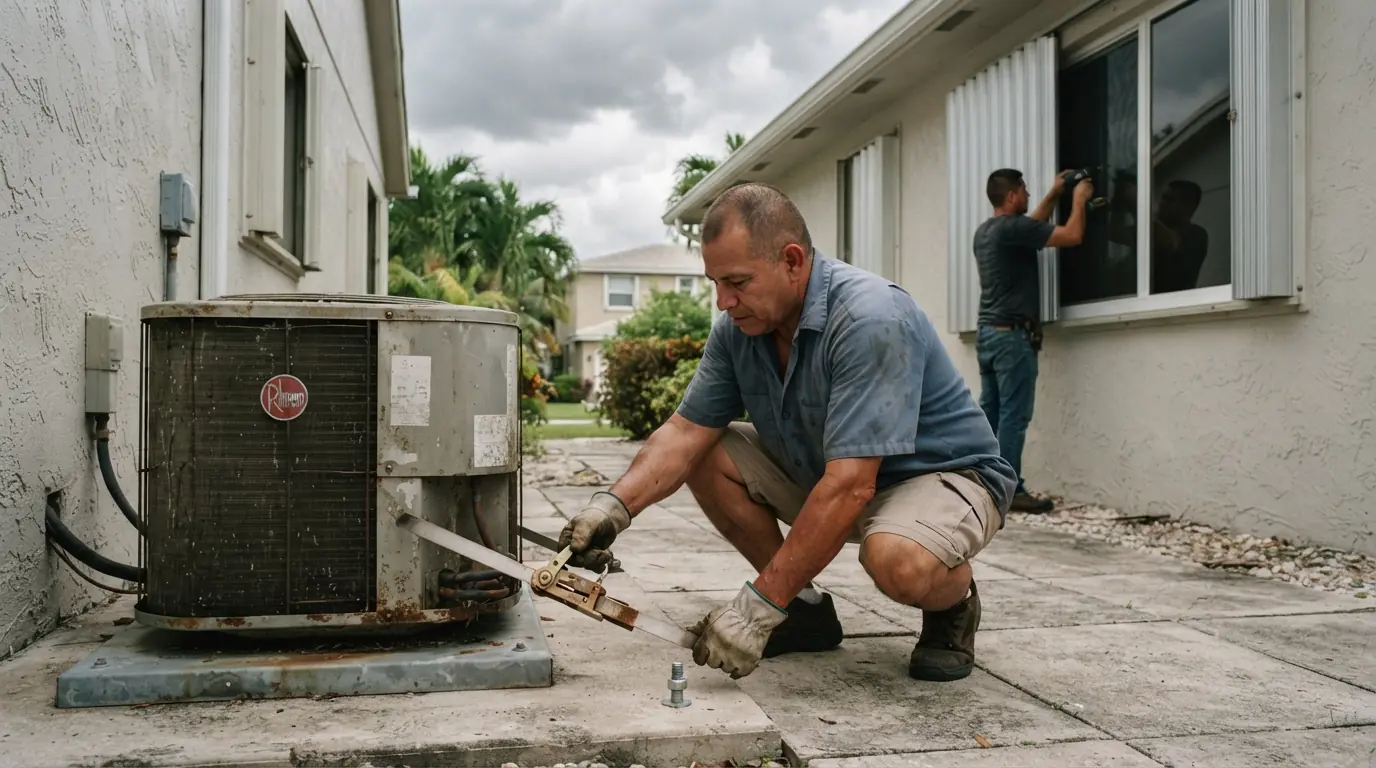
- Check the tie-down straps and anchors on the condenser. Florida code requires outdoor units to be secured against wind; straps rust and bolts loosen over time.
- Make sure the concrete pad is level and intact.
- Install a surge protector at the outdoor disconnect if there is not one.
- In low-lying areas near the bay, canals or the beach, consider raising the condenser on a code-compliant stand.
- Book a tune-up so a weak capacitor or contactor is not waiting to fail after the storm.
When a storm is coming
Once a watch or warning is issued, bring in or tie down anything that could fly into the condenser: patio furniture, planters, trash cans. Before the wind picks up and the power starts flickering, turn the AC off at the thermostat and then at the outdoor disconnect or breaker.
Do not wrap the condenser in plastic or a tarp. It traps moisture against the coil and electrical parts and can blow loose and become debris itself.
After the storm
Walk around the unit once it is safe to go outside. Look for anything that has hit it, a shifted or tilted cabinet, bent refrigerant lines, and a water line on the cabinet showing how high flooding reached.
If the condenser sat in flood water, leave it off. Water in the electrical compartment and compressor terminals can cause a short or damage the compressor the moment power is applied. Have it inspected first.
Restarting safely
Wait until power has been stable for a while, not just a few minutes; FPL restoration often involves several brief outages. Clear leaves and debris from around the unit. Turn the breaker or disconnect back on, wait a few minutes, then turn the AC on at the thermostat. Listen for unusual humming, clicking or grinding and watch that the outdoor fan spins. If anything seems wrong, turn it off and call.
Protecting your insurance claim
Take photos of the unit before and after the storm, including any water lines and damage. A dated inspection report with readings helps document the condition if you file a claim.
Need a technician instead of a guide? Call (786) 434-0401; we answer 24 hours a day across Miami-Dade.