Quick answer
Most Miami AC leaks come from a clogged condensate drain line. Algae grows in the warm, wet PVC pipe until water backs up into the pan and overflows. Other causes are a rusted or cracked pan, a frozen coil melting all at once, a slipped drain fitting, or ducts sweating in the attic. Turn the system off, dry the area, and check the drain outlet outside.
Written by Sylvia Denton, HVAC Guides Editor. Updated 2026-09-22.
Where the water comes from
An air conditioner does two jobs at once: it cools the air and it pulls moisture out of it. In Miami the second job is enormous. On a humid July afternoon a typical three-ton home system can condense a gallon of water an hour on its indoor coil. That water drips into a pan under the coil and runs out through a three-quarter inch PVC line, usually to the outside near the foundation or into a plumbing drain.
As long as that path is open, you never see the water. When anything in it fails, the water goes somewhere else, and that somewhere is usually your floor, your baseboard or the ceiling under an attic unit.
The five usual causes
In our service calls across Miami-Dade, nearly every leak falls into one of five groups. The first is by far the most common.
- A clogged condensate drain line, packed with algae and slime that grows in warm standing water.
- A rusted secondary pan or cracked primary pan, common on air handlers older than about ten years.
- A frozen evaporator coil, caused by a dirty filter or low refrigerant, that melts faster than the pan can drain.
- A drain fitting that has slipped apart at the air handler or the trap.
- Ducts or the plenum sweating in a hot attic because their insulation is torn.
Two-minute checks before you call
You can learn a lot quickly. None of these checks require tools, and none of them involve opening electrical panels.
- Turn the AC off at the thermostat. Less running time means less new water.
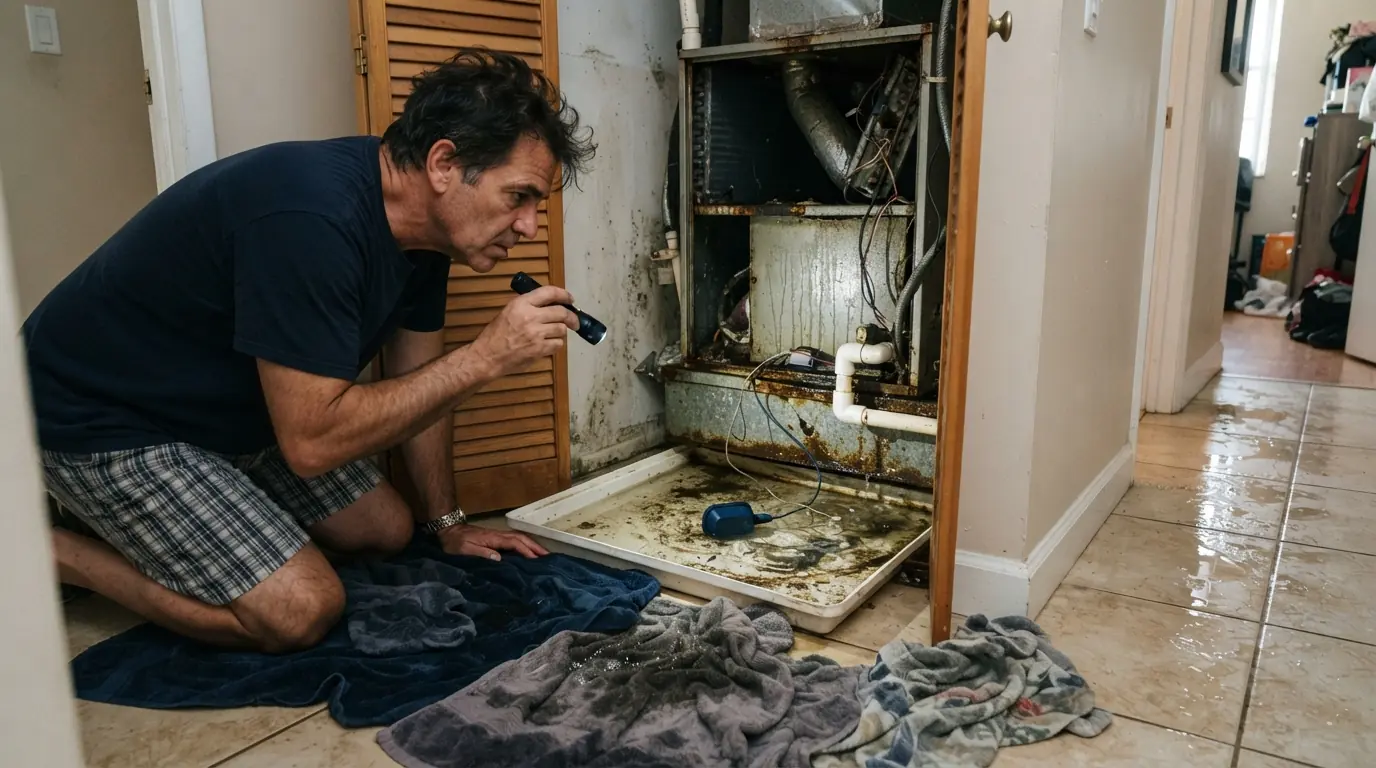
- Look in the pan under the air handler. Standing water means the drain is not clearing.
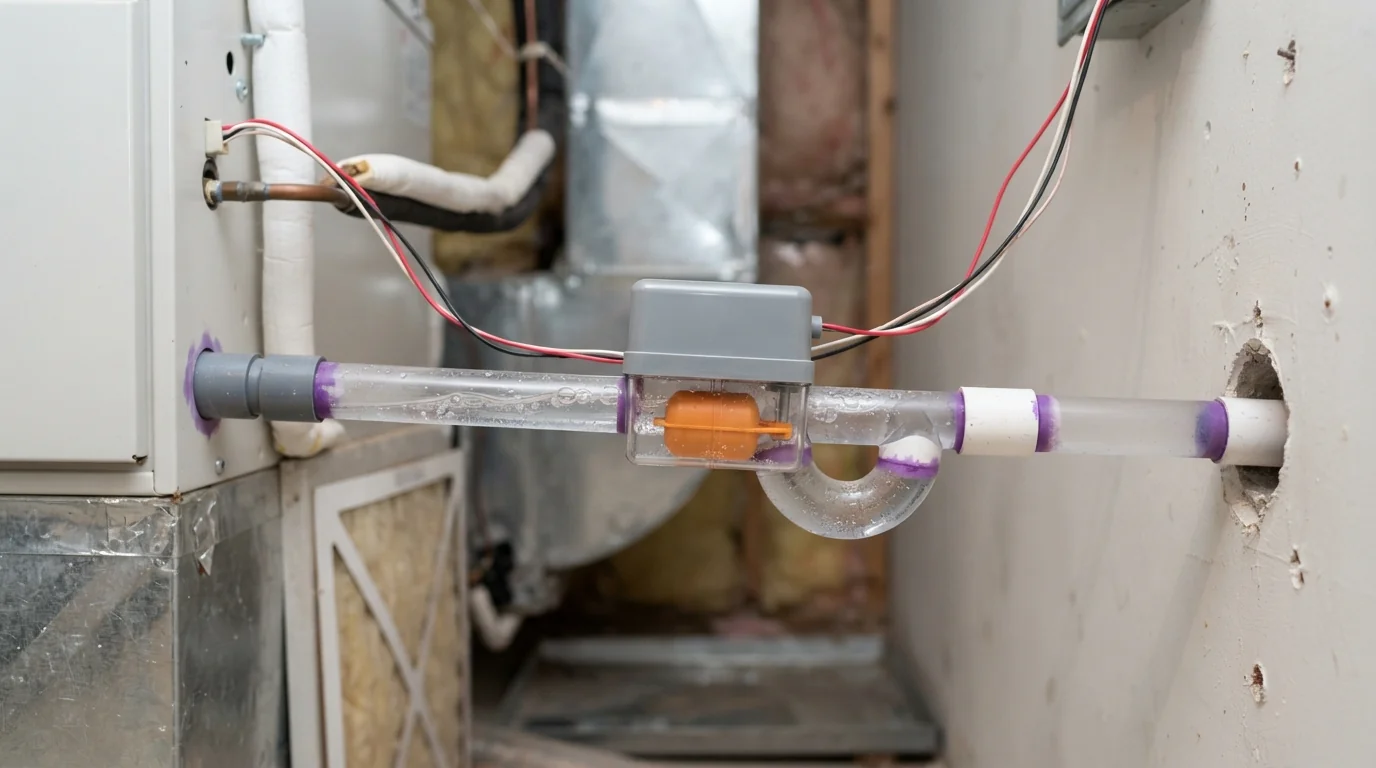
- Find the float switch, a small device in the pan or on the drain line. If the system is off and the pan is full, the switch did its job.
- Go outside and find where the drain line ends. On a hot afternoon it should drip steadily when the AC runs. A dry outlet points to a clog.
- Check the filter. If it is packed with dust, a frozen coil may be the real cause.
What you can safely do yourself
If the outdoor outlet is accessible, a wet-dry vacuum held over it for a minute or two often pulls a clog out in one piece. Pouring a cup of distilled white vinegar into the drain access port at the air handler each month in summer slows algae growth. Replacing a dirty filter and running the system on fan only for an hour thaws a lightly iced coil.
What we do not recommend is bypassing or taping a float switch so the AC keeps running. That switch is the only thing standing between a clogged drain and a soaked ceiling.
When to call a technician
Call if water keeps coming back after you have cleared the outlet, if the pan is rusted through, if you see ice on the coil or refrigerant lines, if water has reached the ceiling below an attic unit, or if the system will not restart. A technician can clear the trap inside the wall, flush the full line, replace a pan or float switch, and find the airflow or refrigerant problem behind a frozen coil.
In condos, call sooner rather than later. A condo air handler usually drains into a shared building line, and an overflow can reach the unit below.
How to keep it from happening again
A drain line cleaning at least once a year, and twice a year for attic units, prevents most leaks in Miami. Add a monthly vinegar flush in summer, keep the filter clean, and make sure every air handler has a working float switch. If the line has no cleanout, adding one makes future flushing quick and clean.
Need a technician instead of a guide? Call (786) 434-0401; we answer 24 hours a day across Miami-Dade.