Quick answer
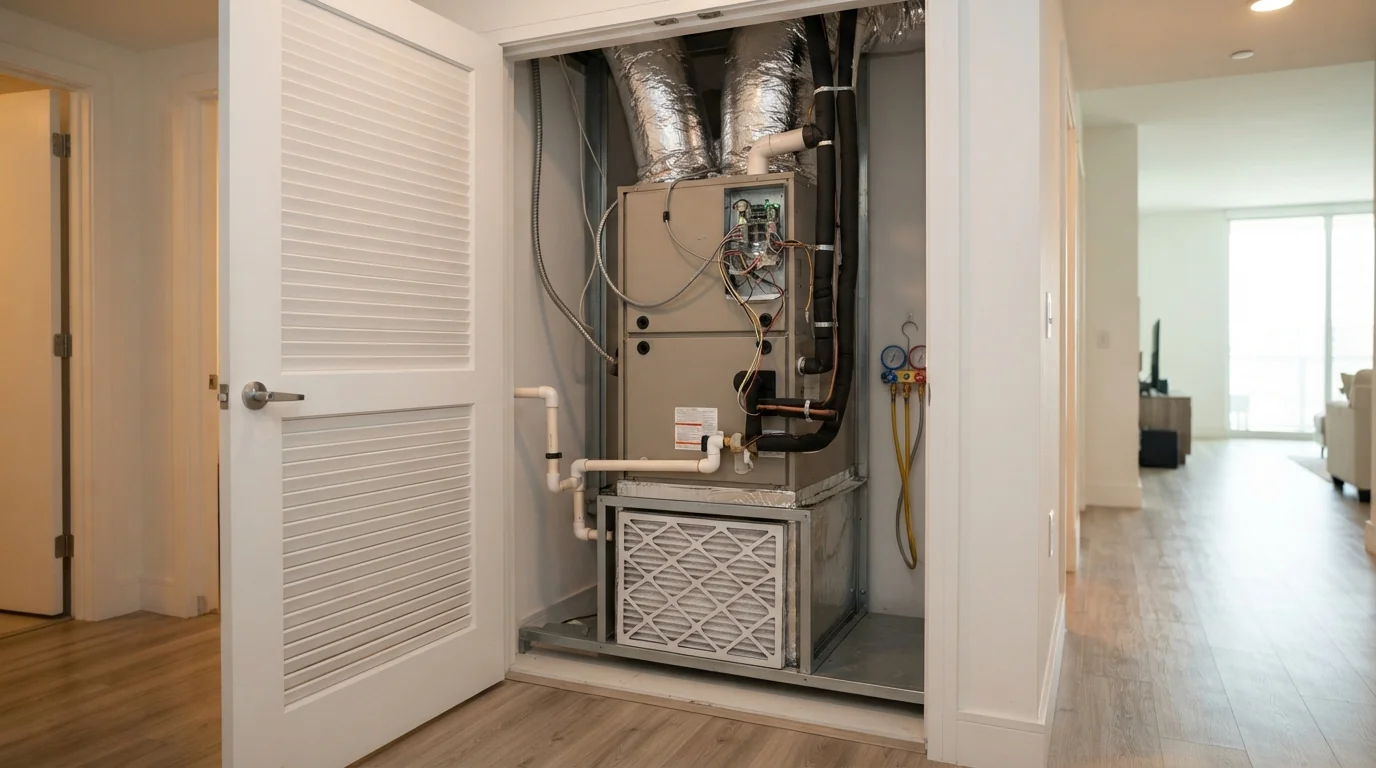
Before replacing a condo AC in Miami, check your association's rules: most require a contractor application, approved work hours, a reserved freight elevator and sometimes equipment approval. Know your system type, whether a closet split, a water-source heat pump on the building loop, or a fan coil, and make sure the new unit has a working float switch to protect the unit below.
Written by Sylvia Denton, HVAC Guides Editor. Updated 2026-09-22.
Start with the association
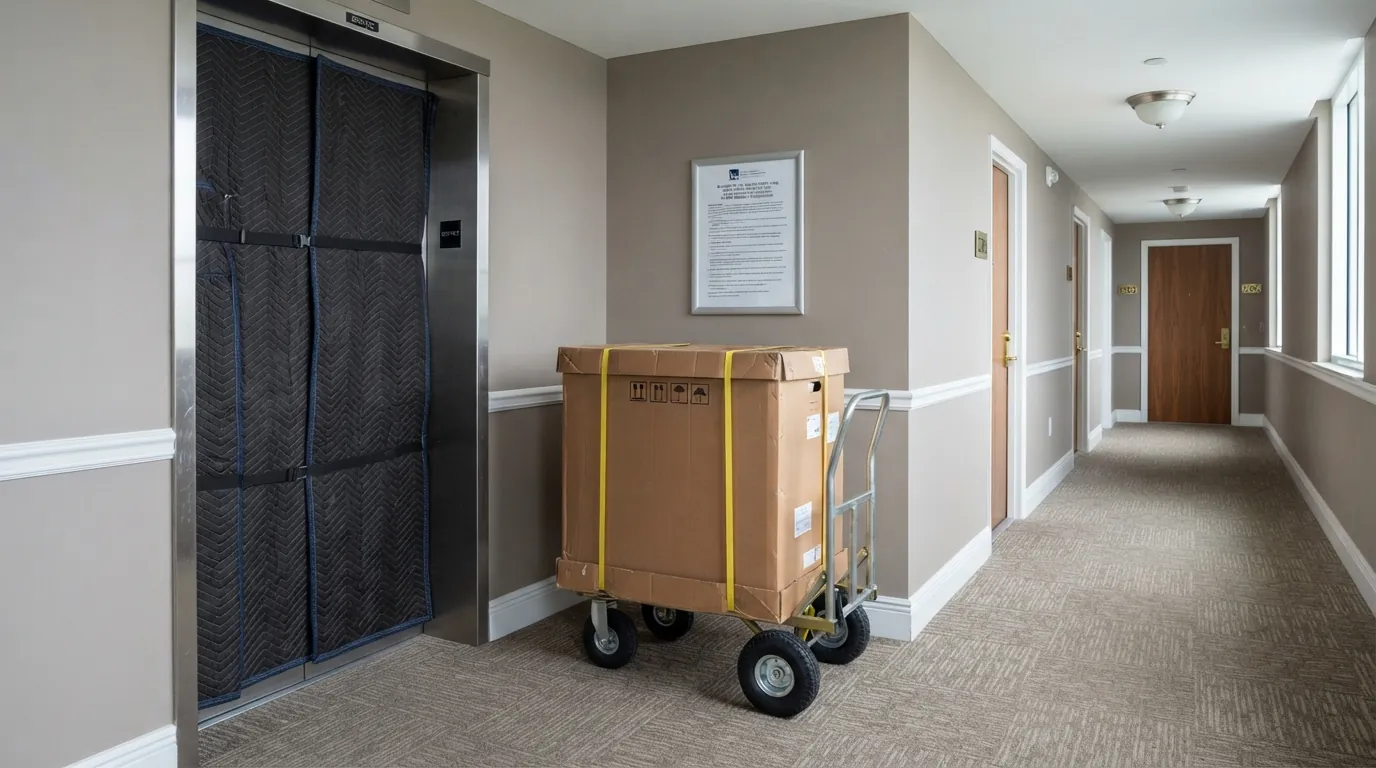
Most Miami condo associations have written rules for contractor work. They commonly require a contractor application submitted in advance, work limited to weekday daytime hours, a reserved freight elevator, and floor protection in common areas. Some require approval of the equipment model or size, and older high-rises may require the building engineer to be present when the water loop is opened.
Ask your property manager for the contractor requirements before scheduling. A good contractor will request them and handle the paperwork.
Know what kind of system you have
Miami condos use three main types of systems, and each is replaced differently.
- Split systems: a closet air handler inside plus a condenser on the balcony or roof. Common in low and mid-rise buildings.
- Water-source heat pumps: a self-contained unit in the closet connected to the building's water loop and cooling tower. Common in older high-rises in Brickell and Miami Beach.
- Fan coils: an indoor unit on the building's chilled water system, with no outdoor unit. Common in newer towers.
Size and fit
Condo closets are tight, and the electrical circuit was sized for the original equipment. A bigger unit is not always possible or allowed. The right replacement fits the closet, matches the electrical capacity and meets association rules, and should be sized to the unit's real cooling load rather than simply upsized.
Protect the unit below
Water from a condo air handler usually drains into a shared building line. If that line clogs and the pan overflows, the water can reach your neighbor's ceiling. Every condo replacement should include a new drain pan, a trap and a working float switch that shuts the system off before an overflow. Regular drain cleaning keeps it that way.
Coastal and hurricane considerations
Balcony and roof condensers near the ocean and bay corrode quickly from salt. Coated coils and stainless hardware extend their life. Outdoor equipment must also be anchored to meet Florida wind-load requirements, and many associations specify how.
Timing and scheduling
Once approvals are in, most condo replacements are finished in one day. Build in lead time for the association application, especially in summer when many owners are replacing systems at once. Scheduling in spring avoids the rush.
Need a technician instead of a guide? Call (786) 434-0401; we answer 24 hours a day across Miami-Dade.