Quick answer
FPL has offered rebates on qualifying high-efficiency air conditioner and heat pump replacements for homes it serves. Eligibility, rebate amounts and the paperwork change over time, and rebates usually require installation by a contractor enrolled in the program. Check FPL's current program details and ask your contractor whether they are enrolled before you buy.
Written by Sylvia Denton, HVAC Guides Editor. Updated 2026-09-22.
How AC rebates usually work
Utility rebates exist because efficient air conditioners lower peak demand on the grid. When a homeowner replaces an old, inefficient system with one that meets the program's efficiency level, the utility pays part of the cost.
In most programs the rebate is tied to the efficiency rating of the matched system, not just the outdoor unit. The indoor coil or air handler and the outdoor unit must be an approved match, and the installation often has to be verified.
What equipment tends to qualify
Rebates generally target systems that exceed the federal minimum efficiency, measured today as SEER2. Heat pumps and variable-speed systems often qualify at higher levels than basic single-stage equipment.
Because the rating depends on the matched combination, a contractor should give you the certified match for the exact model numbers quoted.
- Ask for the matched system's SEER2 rating in writing
- Ask whether that match meets the current FPL program level
- Keep the model and serial numbers for the paperwork
Who files the paperwork
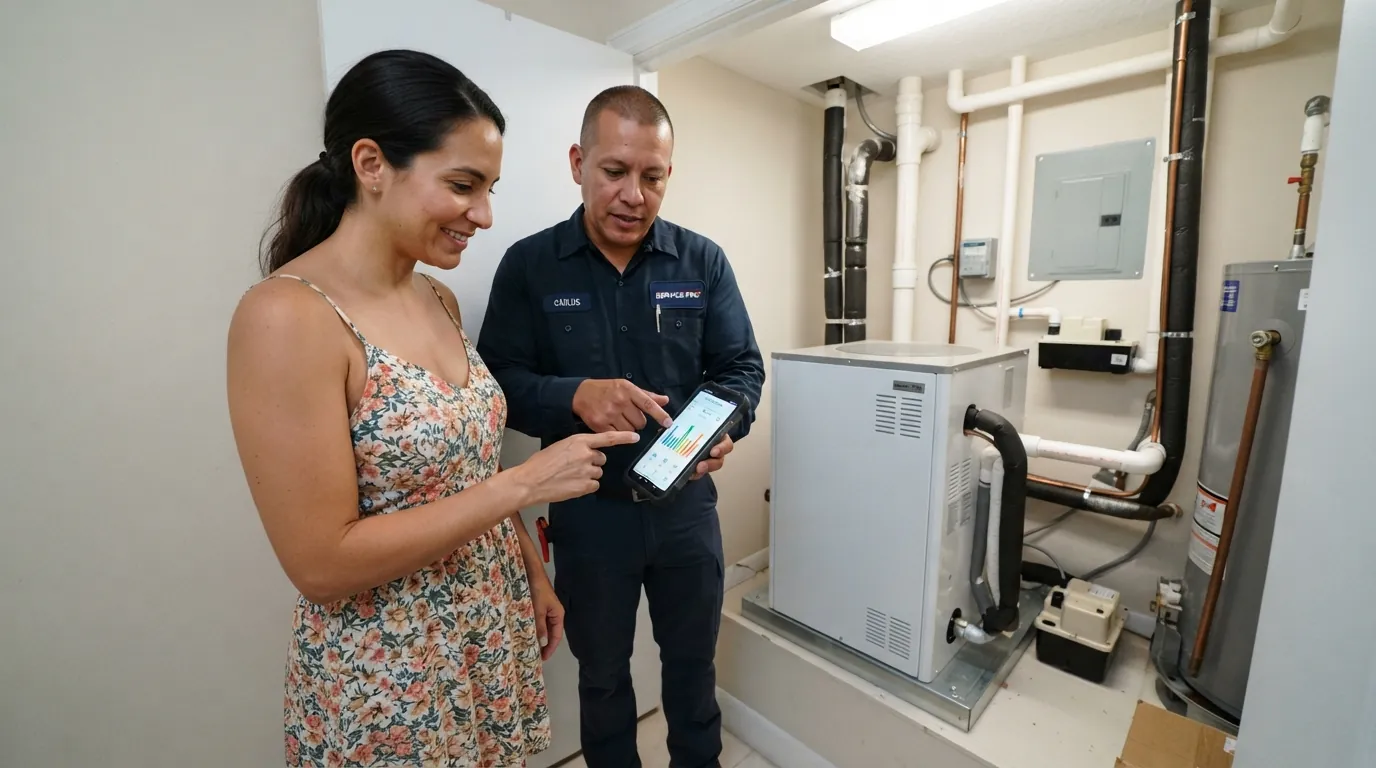
In many utility programs the contractor submits the rebate application after installation, and the homeowner receives the rebate or a credit. Some programs require an inspection or a duct test first.
Ask who files, how long it takes and how the rebate is paid, so there are no surprises.
Rebates are not the whole picture
A rebate is helpful, but the bigger saving over the life of a system comes from correct sizing, good ductwork and lower monthly bills. A slightly more efficient system that is oversized or installed on leaky ducts will not deliver its rated savings.
Federal tax credit rules for home energy equipment changed in 2025, so check current IRS guidance before counting on a credit.
Questions to ask before you replace
A good contractor will answer these without hesitation and put the important parts in writing.
- Is this system eligible for the current FPL rebate?
- Are you enrolled in the program, and who files?
- What is the matched SEER2 rating?
- Is a permit and inspection included?
- What happens if the rebate is denied?
Need a technician instead of a guide? Call (786) 434-0401; we answer 24 hours a day across Miami-Dade.