Quick answer
A musty AC smell in Miami usually comes from mold and biofilm on the evaporator coil, in the drain pan or condensate line, on the blower wheel, or in damp ductwork. High indoor humidity makes it worse. Cleaning the coil, pan, drain and blower, and fixing the humidity problem, removes the source.
Written by Sylvia Denton, HVAC Guides Editor. Updated 2026-09-22.
Where the smell comes from
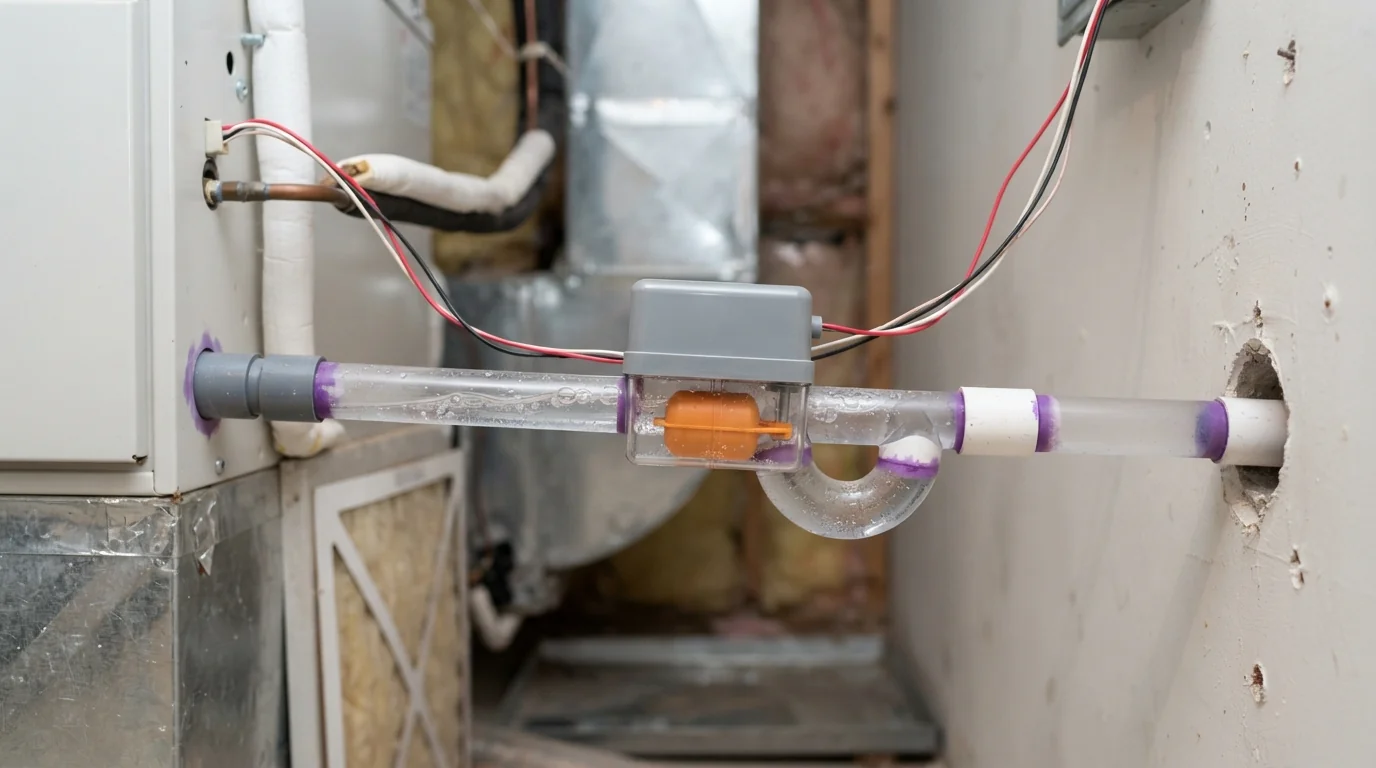
The indoor coil is cold and wet for most of the year in Miami. Dust that gets past the filter sticks to it and feeds mold and bacteria. The drain pan and condensate line hold standing water and slime. When the blower starts, it pushes that smell through the house.
- Evaporator coil
- Drain pan and condensate line
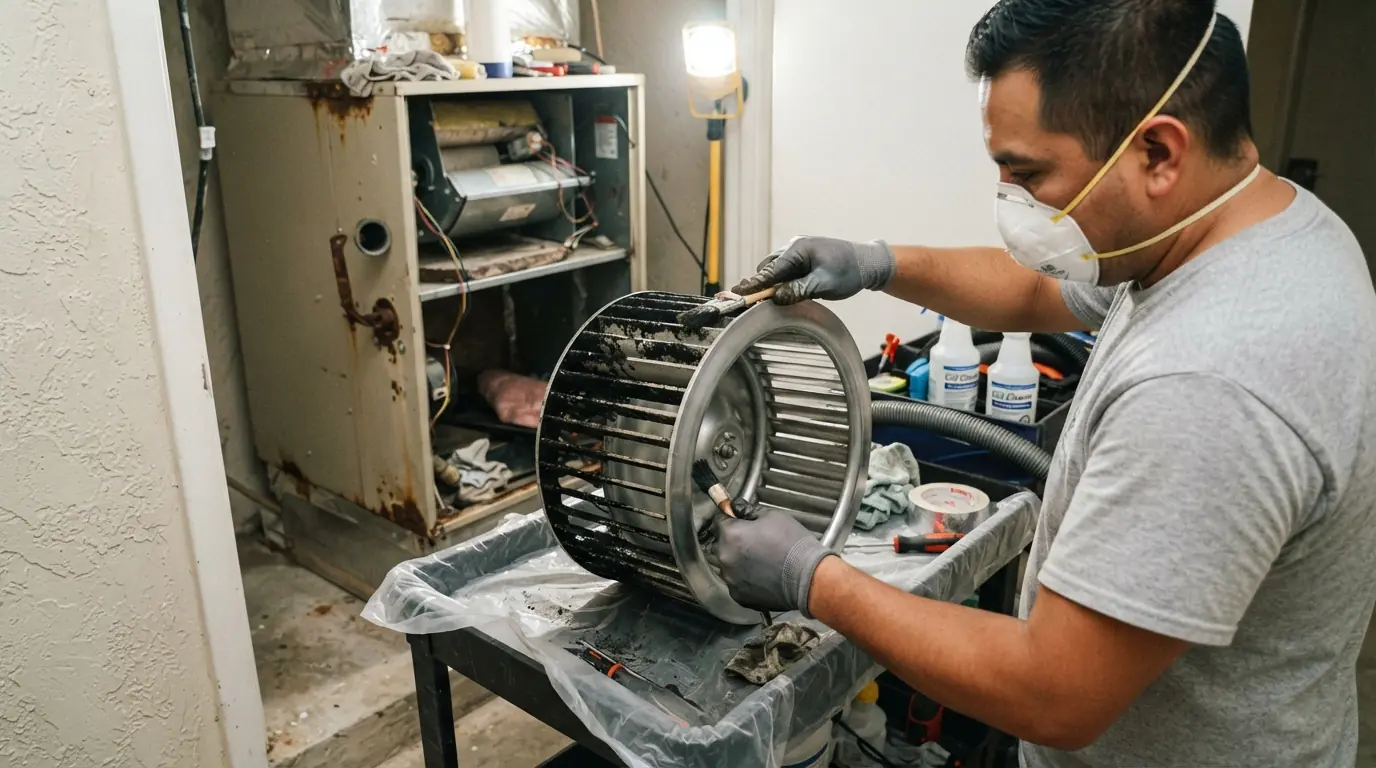
- Blower wheel
- Damp or sweating ductwork
- Mini-split indoor heads
Checks you can do yourself
A few simple checks narrow it down before you call.
- Replace a dirty filter
- Look for standing water in the drain pan
- Check whether the smell is stronger at startup
- Notice whether one room or one vent smells worse
- Check indoor humidity if you have a meter
Why humidity makes it worse
Indoor humidity above about 60 percent lets mold grow on surfaces and in the system. Oversized systems that short cycle, and homes closed up for long periods, often run humid.
Fixing the humidity problem, through correct sizing, longer run times or a dehumidifier, keeps the smell from coming back after cleaning.
What a technician cleans
A technician cleans the coil, flushes and treats the drain line, cleans or replaces the pan, and cleans the blower wheel if needed. For mini-splits, the indoor heads get a full wash. Ducts are inspected for moisture and contamination.
When to call
Call if the smell persists after a filter change, if you see visible mold at the air handler, if water is standing in the pan, or if anyone in the home has allergy or breathing concerns.
Need a technician instead of a guide? Call (786) 434-0401; we answer 24 hours a day across Miami-Dade.